Privacy in the Age of Surveillance

– Message from the Editors –

Individual privacy continues to be a major casualty of rapidly developing information technology. Google and Facebook, Amazon and Walmart, Verizon and Comcast all know more about us than we know about ourselves. New in-the-home devices sold by Amazon, Apple and others are said to listen in to our most intimate conversations. All of this data about individuals has become a commodity to be used, bought and sold by private enterprise and fuels a wide range of businesses.

Increasingly, law enforcement is using new technologies along with large data bases containing information on individual citizens in developing policing systems which further reduce individual privacy. Much experimentation in the development of these new policing technologies is taking place at the local level, with cities such as New Orleans, Los Angeles, New York and many others trying to find the right technological surveillance solutions that works for their cities. The constitutionality of most of these new and evolving policing systems is yet to be decided by the Supreme Court.

We are pleased to publish today the following article by Anthony P. Picadio which traces the way The Supreme Court has applied the Fourth Amendment to the use of technological surveillance by law enforcement starting with a 1928 wire tapping case and continuing through the decision announced in June of last year involving cell site locational information obtained from wireless service providers. Mr. Picadio raises the question whether the Court’s expansion of Fourth Amendment protection into the area of technological surveillance risks the continued development of more effective policing systems and suggests that the area might best be be left to local and state legislatures and to Congress to find the right balance between privacy and public safety.


Privacy in the Age of Surveillance: Technological Surveillance and the Fourth Amendment

by Anthony P. Picadio1

(Originally published in the October 2019 issue of the Pennsylvania Bar Association Quarterly.)


ABSTRACT

I. THE SUPREME COURT’S TECHNOLOGICAL SURVEILLANCE CASES

a. The Pre-Katz Trespass Cases

b. Katz v. United States

c. Enter Justice Scalia: Kyllo and Jones

II. THE THIRD-PARTY DOCTRINE

III. THE BALANCING TEST – RILEY V. CALIFORNIA

IV. THE CARPENTER CASE

V. THE MOSAIC THEORY

VII. THE REAL WORLD OF TECHNOLOGICAL SURVEILLANCE

VII. NOW WHAT?

ENDNOTES

Abstract

It is not an exaggeration to define the times we are living in as the Age of Surveillance.2 Rapid and relentless advances in information technology, artificial intelligence, big data mining, high performance computing and visual and audio detection systems have placed in the hands of governments and private enterprise access to information about virtually every aspect of our lives: where we go, what we buy, with whom we communicate, what ideas and subjects attract our attention and what individuals, groups and organizations we associate with. The loss of an individual’s ability to control access to this personal information has caused a substantial erosion of personal privacy. Of course, much of this loss of control over our personal information has been knowing, and at least arguably, consensual. However, the uses to which this information is being put are neither widely known nor understood and cannot fairly be characterized as consensual.

Although technological advancements have eroded personal privacy, they have also produced substantial societal benefits. This is especially true in the area of crime control and prevention. Law enforcement can not only track the movements of criminal suspects with incredible accuracy, they also now have the capability to predict where crimes are most likely to occur and the most likely perpetrators and victims of those crimes.3 Very little attention has been paid to these beneficial aspects of advances in surveillance technologies. This lack of appreciation of the actual and potential benefits of new privacy-eroding technologies — the other side of the coin so to speak — is most noteworthy in United States Supreme Court opinions evaluating surveillance technologies under the Fourth Amendment.

This article examines the way the Supreme Court has approached technological surveillance under the Fourth Amendment, points out the inadequacy of the analytical tests currently employed by the Court, and suggests a different approach. It raises the question whether the Court’s current approach may do more harm than good by endangering the use and development of effective crime control and prevention techniques.

I. THE SUPREME COURT’S TECHNOLOGICAL SURVEILLANCE CASES

The principal vehicle by which the tension in our society between personal privacy and governmental surveillance is resolved is the Fourth Amendment to the United States Constitution as interpreted by the United States Supreme Court. The Fourth Amendment provides:

The right of the people to be secure in their persons, houses, papers, and effects, against unreasonable searches and seizures shall not be violated, and no warrants shall issue, but upon probable cause, supported by oath or affirmation, and particularly describing the place to be searched, and the persons or things to be seized.

Read literally, the Amendment protects against searches of houses (“the place to be searched”) and the physical seizure of individuals or objects (“persons or things to be seized”). Digital information and internet communications are about as far removed from these concepts as one could imagine. A digital file is not really a “place,” and a digital document is not quite a “thing.” The words of the Fourth Amendment have to be stretched considerably to reach the digital world. The Court has been struggling with applying the Fourth Amendment to evolving means of surveillance since at least 1928.

a. The Pre-Katz Trespass Cases

Before 1967, the Fourth Amendment was pretty much home-bound. It was generally considered to limit the government’s power to intrude upon the privacy of one’s home. What occurred away from the home was fair game for unrestricted, government surveillance.

Chief Justice William Howard Taft

For example, in Olmstead v. United States (1928),4 the Court held that police wiretaps placed on telephone lines some distance from the home being surveilled did not constitute a “search” within the meaning of the Fourth Amendment because there was no physical entry into the defendant’s home.

In Olmstead, several “bootleggers” had been convicted of violating the Prohibition Act on the basis of evidence obtained through extensive governmental wiretapping of defendants’ telephone conversations. In a 5-4 decision, the Court held that the wiretaps did not constitute an unlawful search and seizure under the Fourth Amendment. Writing for the majority, Chief Justice William Howard Taft stated:

The Amendment itself shows that the search is to be of material things—the person, the house, his papers or effects. The description of the warrant necessary to make the proceeding lawful is that it must specify the place to be searched or the person or things to be seized.5

This literal reading of the Amendment precluded its extension to wiretapping:

By the invention of the telephone fifty years ago…. one can talk with another at a far distant place. The language of the Amendment cannot be extended and expanded to include telephone wires The Fourth Amendment is to be construed in light of what was deemed an unreasonable search and seizure when it was adopted.6

Although the term was not yet in general usage, the Taft opinion set forth an “originalist” interpretation of the Fourth Amendment as applied to technological surveillance techniques developed long after the Amendment’s adoption.

Justice Louis Brandeis wrote a dissenting opinion in Olmstead rejecting Taft’s originalist analysis and presenting what remains today perhaps the most eloquent argument in favor of a living Bill of Rights, one which adapts the concerns of the framers to modern times:

Time works changes, brings into existence new conditions and purposes. Therefore, a principal to be vital must be capable of wider application than the mischief which gave it birth. This is particularly true of constitutions. They are not ephemeral enactments, designed to meet passing occasions. They are, to use the words of Chief Justice Marshall,“ designed to approach immortality as nearly as human institutions can approach it.”7

Brandeis went on to observe that “[t]he progress of science in furnishing the Government with means of espionage is not likely to stop with wiretapping.”8 Already, “[s]ubtler and more far-reaching means of invading privacy have made it possible for the Government”9 to spy on its citizens. For the Fourth Amendment to have any effect in protecting Americans from these technological advances in surveillance, it is necessary to look beyond the literal worlds of the Amendment to the fundamental purpose which those words were intended by the Framers to serve. And the Framers’ purpose, in Justice Brandeis’ words, was:

[t]o secure conditions favorable to the pursuit of happiness. They recognized the significance of man’s spiritual nature, of his feelings and his intellect. They knew that only a part of the pain, pleasure and satisfaction of life are to be found in material things. They sought to protect Americans in their beliefs, their thoughts, their emotions and their sensations. They conferred, as against the Government, the right be let alone—the most comprehensive of rights and the right most valued by civilized man. [Emphasis added].10

Thus, over 90 years ago, Louis Brandeis found the right most longed for today, the right to be left alone, to be embodied in the spirit of the Fourth Amendment. However, five of the justices were not convinced and, by one vote, the holding of Olmstead became the law of the land; under the Fourth Amendment wiretapping without a warrant was constitutional.

Seventeen years after Olmstead, in Goldman v. United States (1942),11 the Court held that the placing of a “detectaphone” on the outer wall of the defendant’s office for the purpose of overhearing conversations within the room did not constitute a search under the Fourth Amendment because there was no physical intrusion into the defendant’s premises.

The Goldman majority found Olmstead to be controlling and specifically declined the invitation to overrule it. Four justices, including Justice Frankfurter, were in favor of overruling Olmstead, but once again they lacked one vote. In an echo of the Brandeis Olmstead dissent, Justice Murphy, in dissent, wrote:

The conditions of modern life have greatly expanded the range and character of those activities which require protection from intrusive action by Government officials if men and women are to enjoy the full benefit of that privacy which the Fourth Amendment was intended to provide.12

In Silverman v. United States (1961),13 the Court reached a different result where police officers listened to conversations in an adjoining home by inserting a “spike mike” through a common wall. A unanimous Court held that an unconstitutional search occurred since the mike made contact with a heating duct on the other side of the wall, thus entering an integral part of the premises. As long as the surveillance technique did not cause a physical intrusion into the target’s home (or other private space) the Fourth Amendment did not apply. But where it did, a search within the meaning of the Fourth Amendment occurred under the trespass doctrine of Olmstead and Goldman.

b. Katz v. United States

This all changed in 1967 when the Court, in the case of Katz v. United States,14 expanded the application of the Fourth Amendment beyond the home or other private space and applied it to prohibit the government from using an electronic listening device to eavesdrop on the telephone conversation of a bookie, Charles Katz, who was using a public telephone booth to place calls to gamblers in another state. In the process, the Court finally overruled Olmstead.15 In Katz, the listening device was attached to the exterior of the telephone booth and did not intrude into the closed space of the booth. Nevertheless, the Court found that an unconstitutional search occurred. Katz was the first Supreme Court case to hold that a physical intrusion into a private space was no longer required to trigger the protection of the Fourth Amendment.
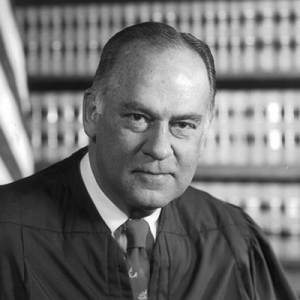
Justice Potter Stewart

It is difficult to overstate the importance of Katz. Justice Potter Stewart, writing for a 7-1 majority, broke with prior case law which emphasized “the place” being searched and, in what was a truly revolutionary statement, said:

[T]he Fourth Amendment protects people not places. What a person…. seeks to preserve as private, even in an area accessible to the public, may be constitutionally protected.16

Although he took pains to say that the Court was not creating a generalized right of privacy (“The Fourth Amendment cannot be translated into a generalized ‘right to privacy.’”17), that is exactly what it did. For the first time in our nation’s history, a citizen had a constitutionally protected right to be free of government snooping wherever he/she was and wherever he/she went, so long as he/she took steps to protect his/her privacy. Justice Stewart found that Charles Katz had taken such steps when he shut the phone booth door behind him and paid the toll that permitted him to place the call.

Justice John Harlan, II, wrote a concurring opinion in which he stated:

My understanding of the rule that has emerged from prior decisions is that there is a twofold requirement, first that a person have exhibited an actual (subjective) expectation of privacy and, second, that the expectation be one that society is prepared to recognize as “reasonable.”18

The Harlan concurring opinion is the genesis of the reasonable expectation of privacy test for which Katz is so frequently cited.

The Court declined to extend the Fourth Amendment’s reach to a motor vehicle in United States v. Knotts (1983)19 where the police surreptitiously placed an electronic device in a chemical drum, which a codefendant then placed in his car, to monitor its movements on public roads. The target did not own the drum; hence the placement of the device into the drum did not constitute a trespass. The Court said that tracking the movements of the car using the electronic device concealed in the drum did not amount to a search under Katz because a person has no reasonable expectation of privacy in his movements on public streets. (“A person traveling in an automobile on public thoroughfares has no reasonable expectation of privacy in his movements from one place to another.”)20

c. Enter Justice Scalia: Kyllo and Jones

Justice Scalia was not on the Court when Katz was decided. While he recognized Katz as binding precedent, he was scathing in his criticism of its reasonable expectation of privacy test. In a concurring opinion in Minnesota v. Carter,21 he derided the Katz test as a “fuzzy standard”22 and a “self-indulgent test”23 that had “no plausible foundation in the text of the Fourth Amendment.”24 For him, the language of the Fourth Amendment protected only the right of people to be secure in their “persons, houses, papers and effects.”25 That’s all that the Framers wrote, and that’s all that the Amendment protects.

Justice Antonin Scalia

So how would Justice Scalia, originalism’s strongest proponent, apply what the Framers wrote to a case involving newly-developed technological methods of surveillance that the Framers could not have ever dreamed of? The first such case was Kyllo v. United States (2001),26 where Justice Scalia wrote the majority opinion.

Kyllo involved the use of a heat detection device that was used to scan a house in which the owner was suspected of growing marijuana, which typically requires the use of high intensity, heat-generating lamps. The scan of the house was conducted by a federal agent from his vehicle parked across the street from the house and took only a few minutes. The device in question was non-intrusive, emitted no rays or beams and showed only a crude visual image of the heat being radiated from the outside of the house. It did not reveal conversations or other intimate details of the home. The scan showed that a side wall and the roof over the garage were relatively warmer than the rest of the home. Based in part on this evidence a federal magistrate issued a search warrant for the home, which was executed by federal agents who found an indoor growing operation involving more than 100 plants.

Justice Scalia began by pointing out that the visual observation of a home had always been considered lawful under the pre-Katz trespass test:

The permissibility of ordinary visual surveillance of a home used to be clear, because well into the 20th Century, our Fourth Amendment jurisprudence was tied to common-law trespass.27

But what occurred here was no ordinary visual surveillance:

The present case involves officers on a public street engaged in more than naked-eye surveillance of a home. We have previously reserved judgment as to how much technological enhancement of ordinary perceptions from such a vantage point, if any, is too much.28

* * *

The question we confront today is what limits there are upon this power of technology to shrink the realm of guaranteed privacy.”29

He went on to hold that the technology utilized here went beyond the limits because the information it provided to the federal agent, concerning what was going on inside the house, could not have been obtained in the 18th Century without physically entering the house:

We think that obtaining by sense-enhancing technology any information regarding the interior of the home that could not otherwise have been obtained without physical ‘intrusion into a constitutionally protected area,’ . . . constitutes a search—at least where (as here) the technology in question is not in general public use. This assures that degree of privacy against government that existed when the Fourth Amendment was adopted.30

In this interesting and clever way, Justice Scalia was able to connect the words of the Amendment to modern technology by protecting that degree of privacy that those words created when they were first written. At the same time, he nudged the analysis back toward the trespass standard anchoring it to the language of the Amendment protecting privacy of “persons, houses, papers and effects.” He paid homage to Katz in the process by referencing “the minimal expectation of privacy that exists, and is acknowledged to be reasonable” regarding the interior of the home.31

Kyllo was a 5-4 decision. Justice Stevens wrote the dissenting opinion which found the use of the heat detection technology entirely permissible under both the trespass test (detection of heat radiation did not involve“an unauthorized physical penetration of the premises”32) as well as the Katz test (“A subjective expectation that the [heat waves] would remain private is not only implausible but also surely not “one that society is prepared to recognize as reasonable”33). Heat waves, like cooking aromas, enter the public domain when they leave a building.

Kyllo is an endlessly fascinating case. It appeared that Katz had, once and for all, put a stake through the heart of the trespass test, but Kyllo gave it new life. In Justice Scalia’s view, if it would have taken a trespass to acquire the information in the 18th Century, then the acquisition constituted a search under the Fourth Amendment.

Justice Scalia took another opportunity to move the trespass ball down the field in United States v. Jones (2012).34 In this case, the government had surreptitiously attached a GPS device to the undercarriage of a car while it was parked in a public parking lot. Over the next 28 days, the government used the device to track the car’s movements. The car’s driver, Jones (the car was registered in his wife’s name) was ultimately convicted of conspiracy to distribute cocaine. The conviction was based in part on the GPS-derived locations data which connected Jones to the co-conspirators’ stash house.

As noted above, the Court had previously held in Knotts that the use of an electronic device to track a vehicle’s movements did not constitute a search under the Fourth Amendment because a person had no reasonable expectation of privacy in his/her movements on a public street. But that case was decided before Justice Scalia was on the Court. In Jones, he continued his look-back to the 18th Century that began in Kyllo:

It is important to be clear about what occurred in this case; the Government physically occupied private property for the purpose of obtaining information. We have no doubt that such a physical intrusion would have been considered a ‘search’ within the meaning of the Fourth Amendment when it was adopted.35

He went on to say that a person’s vehicle is among that person’s “effects” which are expressly protected against government intrusion by the Fourth Amendment.36 He squarely held that the property-based trespass test survived Katz, which he suggests would require a different result. He concluded that it was not necessary to decide the case under the Katz test because it could easily be decided by application of the trespass standard. While he did not go so far as reversing Katz (a case which he previously said had no basis in the language of the Fourth Amendment), he did resurrect the property-based trespass test and obtained the votes of four other justices in doing so (Roberts, Thomas, Kennedy and Sotomayor).37

Justice Samuel Alito

Justice Alito wrote a concurring opinion in which three other justices joined (Ginsburg, Breyer and Kagan) which disagreed with Scalia’s view that the trespass test survived Katz. According to Alito, Katz “finally did away with the [trespass] approach.”38 Having disposed of the trespass test, Alito was then confronted with the question of how tracking the vehicle’s movements on public streets could be considered to violate Katz in light of the Court’s previous holding in Knotts that a person in a car has no reasonable expectation of privacy regarding his/her location on the public streets. He did it by focusing on the duration of the surveillance, which took place during a period of four weeks. Justice Alito put it this way:

[R]elatively short-term monitoring of a person’s movements on public streets accords with expectations of privacy that our society has recognized as reasonable…. But the use of longer-term GPS monitoring in investigations of most offenses impinges on expectations of privacy…. In this case, for four weeks, law enforcement agents tracked every movement that respondent made in the vehicle he was driving. We need not identify with precision the point at which the tracking of this vehicle became a search, for the line was surely crossed before the 4-week mark.39

Although he relied on the Katz test to decide that a search had occurred, Justice Alito recognized that the Katz test might prove difficult to correctly apply in this time of rapidly changing privacy expectations.

[T]he Katz test rests on the assumption that this hypothetical reasonable person has a well-developed and stable set of privacy expectations. But technology changes those expectations…. New technology may provide increased convenience opportunities or security at the expense of privacy, and many people may find the tradeoff worthwhile. And even if the public does not welcome the distinction in privacy that new technology entails, they may eventually reconcile themselves to this development as inevitable.40

Perhaps the most interesting aspect of Jones is the way Justice Sotomayor handled the issue of which test applied. She wrote a separate concurring opinion in which she agreed that both the trespass test and the Katz test were violated.41 But she joined in the Scalia opinion rather than the Alito opinion. She therefore provided the crucial vote that revived the trespass test. Had she joined in the Alito opinion the holding of the Court would then have been that the Katz case provided the only viable analysis under the Fourth Amendment.

Before turning to Carpenter v. United States (2018),42 the most recent and most important Fourth Amendment case involving technological surveillance, it is necessary to run down two side streets so we can have a complete picture of the landscape.

II. THE THIRD-PARTY DOCTRINE

Twelve years after Katz was decided, the Court once again applied the reasonable expectation of privacy test, but this time the government won. In Smith v. Maryland (1979), the Court held that the government could install a pen register on the telephone company’s property to record the telephone number dialed by the defendant.43 The Court said that since Smith had voluntarily disclosed the dialed numbers to his telephone company so it could connect his call, he did not have a reasonable expectation of privacy in the numbers he dialed. This case follows United States v. Miller (1976), which held that a person has no reasonable expectation of privacy in information voluntarily given (or made available) to a third person.44 As the Court stated in Miller:

The Fourth Amendment does not prohibit the obtaining of information revealed to a third party and conveyed by him to government authorities, even if the information is revealed on the assumption that it will be used only for a limited purpose and the confidence placed in the third party will not be betrayed.45

Justice Sonia Sotomayor

These two cases have established what has been labeled the “Third-Party Doctrine,” which holds that a person has no reasonable expectation of privacy in information or things voluntarily given to a third party. The acquisition of such information by the government, therefore, is not a “search” under the Fourth Amendment. Under the Third-Party Doctrine, information which an individual voluntarily places in the control or possession of a third person automatically loses its protection under the Fourth Amendment without regard to that person’s subjective privacy expectations. While the doctrine has its defenders, it has been criticized by a number of scholars and, more importantly, by a justice of the Supreme Court. In her concurring opinion in Jones (the GPS car tracking case), Justice Sotomayor had this to say:

More fundamentally, it may be necessary to reconsider the premise that an individual has no reasonable expectation of privacy in information voluntarily disclosed to third parties…. This approach is ill suited to the digital age, in which people reveal a great deal of information about themselves to third parties in the course of carrying out mundane tasks…. I would for one doubt that people would accept without complaint the warrantless disclosure to the Government of a list of every web site they had visited in the last week, or month, or  year…. I would not assume that all information voluntarily disclosed to some members of the public for a limited purpose is, for that reason alone, disentitled to Fourth Amendment protection.46

III. THE BALANCING TEST – RILEY  v. CALIFORNIA

In Riley v. California (2014),47 the Court unanimously held that a warrantless search of the digital contents of an arrestee’s cell phone was unconstitutional under the Fourth Amendment. Prior to Riley, the police were given wide latitude in conducting a search incident to a lawful arrest. Where the arrest itself was based on probable cause, a search of the arrestee’s person required no additional justification. The leading case was United States v. Robinson (1973),48 where an individual who was arrested for a traffic violation was subjected to a “pat down” by the arresting officer who found a crumpled cigarette pack in the arrestee’s coat pocket. The officer opened up the crumpled cigarette pack and found several capsules containing heroin inside. The Court in Robinson held that it was not necessary for the arresting officer to obtain a search warrant before searching the cigarette pack because the search was incident to a lawful arrest.

In Riley (which involved two separate cases), arresting officers took possession of the arrestees’ cell phones and searched their contents, including photographs, emails and other digital information. In deciding that it was necessary for the police to obtain a search warrant before conducting a search of the contents of an arrestee’s cell phone, Chief Justice Roberts, writing for the Court, applied a balancing test:

Absent more precise guidance from the founding era, we generally determine whether to exempt a given type of search from the warrant requirement “by assessing, on the one hand, the degree to which it intrudes upon an individual’s privacy and, on the other, the degree to which it is needed for the promotion of legitimate governmental interests.”49

Roberts emphasized that, unlike other objects that may be carried on an arrestee’s person, a cell phone can contain a digital record of nearly every aspect of a person’s life. As a result, a search of the digital contents of a person’s cell phone is generally far more intrusive than a search for physical objects. Since the Court found that this serious intrusion into an individual’s privacy outweighed the government interest in conducting a warrantless search, it held that a warrant was required before a police officer could conduct a search of an arrestee’s cell phone.

Justice Alito wrote a separate opinion in which he concurred in the result but went on once again to express his misgivings about the desirability of courts deciding questions presented by rapidly developing surveillance technology:

Many forms of modern technology are making it easier and easier for both government and private entities to amass a wealth of information about the lives of ordinary Americans, and, at the same time, many ordinary Americans are choosing to make public much information that was seldom revealed to outsiders just a few decades ago.

In light of these developments, it would be very unfortunate if privacy protection in the 21st Century were left primarily to the federal courts using the blunt instrument of the Fourth Amendment. Legislators, elected by the people, are in a better position that we are to assess and respond to the changes that have already occurred and that almost certainly will take place in the future.50

IV. THE CARPENTER CASE

Carpenter v. United States (2018) is the most recent, and, most important, case to date involving technological surveillance.51 Unlike past cases, the facts of this case could not be stretched to fit the trespass test. This forced all of the justices to face the Katz test head on. As a result, there were five separate opinions (Roberts, Kennedy, Thomas, Alito and Gorsuch). First the facts:

Carpenter was convicted of being involved with others in a string of robberies of Radio Shack and T-Mobile stores, which took place in Ohio and Michigan. The prosecution introduced cell phone locational evidence obtained from Carpenter’s wireless carriers, which showed, with respect to four of the robberies, that Carpenter was “right where the . . . robbery was at the exact time of the robbery.”52 The evidence, referred to as cell site locational information (“CSLI”), consisted of logs of time-stamped records showing each time Carpenter’s cell phone accessed the wireless network, as well as the phone’s location at that time. The records were owned by the wireless carriers, and they were produced to the government in accordance with court orders similar to subpoenas issued under the Stored Communications Act,53 which were not issued based on probable cause. Chief Justice Roberts, writing for the majority, stated the issue presented to the Court as follows:

This case presents the question whether the Government conducts a search under the Fourth Amendment when it accesses historical cell phone records that provide a comprehensive chronicle of the user’s past movements.54

At first blush, this case would appear to be governed by the Third-Party Doctrine. However, Chief Justice Roberts did not see it that way:

[T]he fact that the individual continuously reveals his location to his wireless carrier implicates the Third-Party principle of Smith and Miller We decline to extend Smith and Miller…. to these novel circumstances. Given the unique nature of cell phone location records, the fact that the information is held by a third party does not by itself overcome the user’s claim to Fourth Amendment protection.55

Roberts went on to announce a new rule that “an individual maintains a legitimate expectation of privacy in the record of his physical movements”56 whether the government employs its own technology, as it did in Jones, or utilizes the technology of a third party, as it did in this case.

The chief justice has now staked out the strongest possible position favoring privacy protection in these technology-based Fourth Amendment cases. He wrote the opinion of the Court in Riley, he joined Scalia’s majority opinion in Jones, and he authored the majority opinion in Carpenter. This is clearly an area on which he wants to place his mark. He even made a point of aligning himself with Justice Brandeis, the proponent of the “right to be let alone,” by quoting from the Brandeis dissent in Olmstead:

As Justice Brandeis explained in his famous dissent, the Court is obligated — as “[s]ubtler and more far reaching means of invading privacy have become available to the Government”— to ensure that the“ progress of science” does not erode Fourth Amendment protection.57

There were four separate dissenting opinions in Carpenter (Alito, Kennedy, Thomas and Gorsuch), three of which make powerful arguments against the holding, reasoning and analysis of Roberts’ majority opinion.

Justice Clarence Thomas

Justice Thomas argued for overruling Katz altogether and returning to an exclusive property-based analysis.58 In his view, if you don’t own it, you don’t have any Fourth Amendment rights in it.59 Since the wireless carriers owned their cell site records, Carpenter had no Fourth Amendment right protecting them from government intrusion.

Justice Thomas counted the ways that the reasonable expectation of privacy test has been criticized:

Jurists and commentators tasked with deciphering our jurisprudence have described the Katz regime as “an unprecedented jumble,” “a mess of contradictions and obscurities,” “all over the map,” “riddled with inconsistency and incoherence,” “a series of inconsistent and bizarre results that [the Court] has left entirely undefended,” “unstable,” “chameleon-like,” “notoriously unhelpful,” “a conclusion rather than a starting point for analysis,” “distressingly unmanageable,” “a dismal failure,” “flawed to the core,” “unadorned fiat,” and “inspired by the kind of logic that produced Rube Goldberg’s bizarre contraptions.”60

Justice Thomas’ criticism of the Katz test is difficult to argue with. No one can seriously contend at this point that the Katz test serves any useful purpose other than providing a vehicle for some justices to “update” the Fourth Amendment to conform to their personal views of what limitations ought to be placed on modern government surveillance. It certainly has no predictive value (every new case seems to be an exception to the rule enunciated in the last case); it clearly fails the law settlement function of the judiciary; it does not withstand thoughtful analysis (how does a court go about deciding what “society” considers reasonable?; is there really a unitary “society” holding a common view, or is society itself fractured, as is the Court, into factions holding opposing views?); and the Katz test does not take into account the potential harm to legitimate law enforcement that every incremental advancement of privacy can have.

It is this last point, potential harm to legitimate law enforcement efforts, with which the dissenting opinions of Justices Alito and Kennedy were most concerned. Justice Kennedy said this:

The new rule the Court seems to formulate puts needed, reasonable, accepted, lawful, and congressionally authorized criminal investigations at serious risk in serious cases, often when law enforcement seeks to prevent the threat of violent crimes.61

Justice Alito, this:

[I] fear that today’s decision will do far more harm than good. The Court’s reasoning fractures two fundamental pillars of Fourth Amendment law, and in doing so, it guarantees a blizzard of litigation while threatening many legitimate and valuable investigative practices upon which law enforcement has rightly come to rely.62

Justice Alito’s major objection to the Roberts opinion was that it treats subpoenas for documents the same as searches and seizures under the Fourth Amendment. This, he thought, was inconsistent with precedent and would have far reaching adverse consequences for legitimate law enforcement efforts:

Holding that subpoenas must meet the same standard as conventional searches will seriously damage, if not destroy their utility…. [T]oday the Government regularly uses subpoenas duces tecum and other forms of compulsory process to carry out its essential functions.63

Justice Alito went on to say that throwing a monkey wrench into the existing machinery of law enforcement by requiring probable cause for subpoenas of documents would stop many investigations at “the threshold of inquiry”64 and, as a result, “a host of criminals will be able to evade law enforcement’s reach.”65

Both Justice Kennedy and Justice Alito would have applied the Third-Party Doctrine to hold that Carpenter retained no protectable interest in the cell site information he voluntarily placed into the hands of his wireless service providers.

The Carpenter holding is surprising. It rests on the premise that “society’s expectation has been that law enforcement agents and others would not secretly monitor and catalogue [an individual’s] every single movement.”66  That may be society’s expectation in the case of an individual who is otherwise not suspected of engaging in criminal activity. However, Carpenter was not such an individual. At the time law enforcement subpoenaed his cell site location records, Carpenter had already been identified by a co-conspirator by a participant in the string of robberies in question and had actually been placed under a valid arrest.67 Moreover, unlike the situation in Jones, Carpenter’s movements and location were not monitored in real time. Therefore, let us ask the question this way: Would society’s expectation be that law enforcement should have access to historical cell site location records of an individual after he had been placed under reasonable suspicion of criminal activity and had actually been placed under a valid arrest for such conduct? The answer to this question is surely yes. At that point, society would not consider Carpenter’s subjective intent to the contrary (if he actually had one) to be reasonable. What law enforcement did in Carpenter did not, in any way, jeopardize the privacy rights of the general public. The Court could very easily have said that an individual’s cell site locational information may be accessed by subpoena under the Third-Party Doctrine where that person has been placed under reasonable suspicion of engaging in criminal activity and the basis for that suspicion can be demonstrated. True, reasonable suspicion is not probable cause. But the Court has, in the past, adopted a reasonable suspicion standard in a policing case.68

V. THE MOSAIC THEORY

In fairness to the chief justice and the other four justices who joined in his majority opinion in Carpenter, the majority did attempt to draw a line in order to prevent the catastrophe to law enforcement predicted by Justices Alito and Kennedy. The Roberts opinion drew it at the nature of the records in question. The holding covers only cell site location information (“CSLI”) because of the particularly revealing nature of such information. The case was not merely about records documenting phone use. Rather, “it is about a detailed chronicle of a person’s physical presence compiled every day, every moment, over several years.”69

Carpenter is one of a trilogy of cases where the comprehensive nature of the information sought by law enforcement troubled the Court and led to the requirement of a search warrant.

Chief Justice John Roberts

The first case is Riley (2014), the cell phone search case discussed above, in which Chief Justice Roberts, writing for a unanimous Court, said:

[A] cell phone collects in one place many distinct types of information—an address, a note, a prescription, a bank statement, a video—that reveal much more in combination than any isolated record…. The sum of an individual’s private life can be reconstructed through a thousand photographs labeled with dates, locations, and descriptions…. [T]he data on a phone may date back to the purchase of the phone, or even earlier….

Finally, there is an element of pervasiveness that characterizes cell phones but not physical records.70

It was because of the ability of the data stored on a cell phone to paint a picture of a person’s entire life that led the Court to require the police to obtain a warrant to search an arrestee’s cell phone.

The second case emphasizing the ability of the data to reveal all aspects of a person’s life is Jones (2012), also discussed above, where the Court held that using a GPS device to monitor a vehicle’s location for a period of four weeks required a search warrant. Both Justice Alito and Justice Sotomayor emphasized the accumulation of details about a person’s life which law enforcement obtained during the “long-term” tracking that was involved in that case.71 Carpenter, of course, completes the trilogy.

This idea that if the data acquired by the government is sufficiently comprehensive or long-term to paint a detailed picture of an individual’s life, then such acquisition constitutes a search within the meaning of the Fourth Amendment, has been referred to as the “Mosaic Theory” of data collection by the government.72 Each individual tile in a mosaic tells us very little about what is depicted, but step back and view all of the individual tiles together and well, you get the picture. The Alito and Sotomayor concurring opinions in Jones essentially adopt the mosaic theory. The Roberts opinions in Riley and Carpenter also embrace it.

However, if the Court is truly concerned with the government’s access to  massive databases containing detailed and intimate information about individuals, it is difficult to see how it can draw and maintain the line at databases containing only locational information. Lay a subpoena on Google, for example, and you discover every internet search, every download, every email sent by subscribers of google.com (because Google actually retains a digital copy of each email) and much locational data. A subpoena on Google would produce information much more revealing than would a subpoena of wireless carrier’s records.

Using many different sources of information, Google maintains location data on users of Android enabled smart phones that is far more detailed than what can be obtained from CSLI alone. CSLI information can place a person in the general vicinity of a building, perhaps within a city block. Google can place that person in a room in that building and follow him step-by-step as he moved through that room.73 Facebook has enough information in its databases to profile well over one billion individuals in great detail. It would seem that the concern expressed in Carpenter about massive databases and their ability to reveal a detailed picture of an individual’s daily life would apply with even greater force to companies like Google, Facebook, Microsoft and Amazon. Although extending Carpenter to these other companies might appear to be a good thing from a privacy protection point of view, it may, in the long run, not only make legitimate law enforcement more difficult, it may also retard the development and application of surveillance technologies which could prove effective in solving, preventing and reducing crime, and protecting potential victims of crime.

Under the Mosaic Theory as applied in Carpenter, when the extent of the surveillance produces sufficient information to present a complete mosaic, the Third Party Doctrine will not apply and the surveillance will constitute a search under the Fourth Amendment, triggering the search warrant requirement. In other words, the more useful to law enforcement the information becomes, the less likely it is that it can be used in an arrest or prosecution in the absence of a search warrant. This may prove to be particularly problematic in domestic terrorism investigations where early detection and capture are essential.

VI. THE REAL WORLD OF TECHNOLOGICAL SURVEILLANCE
Andrew Ferguson

Cell site location information like that used in the Carpenter case has helped law enforcement solve many crimes. A number of these are described by Andrew Guthrie Ferguson in his book on big data policing.74 One of the more famous of these cases is known as the case of the “High Country Bandits.” This duo of thieves robbed 16 small-town banks over the course of two years. One would enter the bank near closing time. He would brandish a gun in front of a teller, demanding and receiving all of the cash in the cash drawer. The second suspect stood watch. The FBI caught them by using CSLI from cell towers near four of the most rural banks. One Verizon cell phone number popped up near three of the four banks at the time the robberies were occurring. The FBI also determined that this phone communicated with another phone also near two of the banks at the times in question. The FBI then took those numbers and were able to locate the phones near the remaining bank robberies, again using CSLI obtained without a search warrant. The High Country Bandits were apprehended, removed from society and their crime spree was stopped.75 According to Ferguson:

In the United States, police have used cell-tower searches in thousands of criminal cases. In some instances, police simply subpoenaed the phone numbers from cell phone companies, and in other cases the police directly intercepted the cell phone number using “cell site simulators.”76

In his book, Ferguson catalogues the many ways law enforcement is using large databases and algorithms to predict not only where crime is likely to occur, but also who is likely to be a perpetrator and who a victim. What is actually going on in the world of cyber surveillance makes the concern with cell site location information seem naïve and even downright silly. For example, Ferguson reports that AT&T has for years maintained a massive database of telephone metadata in searchable form. A record of every telephone call passing through AT&T switches is maintained in this database:

Without a judicial warrant, law enforcement can obtain targeted information using an administrative subpoena or equivalent judicial order. This metadata connects the dots of social networks and locations of people suspected of criminal activities.77

Not only can law enforcement track an individual’s whereabouts over the past five years using this data, it can also learn the identities of each person with whom the target interacted, along with the frequency and duration of each such interaction. How about that for creating a detailed mosaic of an individual’s life!

Big data and artificial intelligence are being used by the police right now in a number of cities to identify bad apples and remove them from society through prosecution. The use of these high-tech policing systems has been effective in reducing crime rates. In New Orleans, Palantir Technologies, a private American company that specializes in big data analytics for governments, designed a system that integrated all existing policing and public safety data in the city’s records, along with details of the city’s infrastructure. The new system was used to determine likely perpetrators and victims of crimes:

Using crime-mapping software, particular violent hot spots were identified. Using social network analysis, particular individuals were identified as being most likely to be victims of violent crimes…. New Orleans analysts could identify particular  individuals  at  risk  for  violence…. Analysts  using  Palantir  systems identified 2,916 individuals from the general New Orleans population of 378,750 most likely to be the victim of homicides.78

Using this data along with data identifying likely perpetrators, the city initiated 29 different outreach programs focusing on family, school, job training, etc., as well as more focused policing. The result was a dramatic decrease in homicides (29%) and gang murders (55%).79

New Orleans used data from its own records and publicly available information in constructing its system. Other police forces are integrating commercial databases into their policing systems.

Enter…. the data brokers who have been collecting billions of bits of information about you, your family, and your home. Conveniently this information is arranged by address and accessible in real time for police responding to your home. The same folks who know you have stable credit, two kids, and a good job and like fine wine and cooking magazines, can also predict whether you will be a danger when you open the door.80

Similar data has been used by at least one police department to develop “threat scores” about addresses and the people who live there.

New York City has partnered with Microsoft to develop a system linking 9,000 closed-circuit surveillance cameras for real-time monitoring of lower Manhattan. The videos feed into a digital alert system that is trained to recognize threatening or suspicious behavior. Automated license-plate systems record every car that enters the area and link to all of the information in the various included databases identifying the occupant/owner, his/her violation record, criminal record and threat level. The system also connects to terrorist databases.

The recorded video can be replayed to track the direction, location, and movements of the suspect, and the technology can even search for descriptions, such as “all people wearing red shirts near the New York Stock Exchange.” Still photos of matching people can be pulled up with one search, tagged to location, time and date.81

Automatic license plate readers (“ALPRs”) have been in use for some time. They can scan a license plate and automatically compare it to a database of stolen cars, unpaid tickets or any other variable. As police cameras record license plates, a digital record is made containing the date, time and location of each license plate. Ferguson again:

Over time the accumulated tracking of cars provides clues about travel patterns, habits, and the actual location of cars at certain times.82

Facial recognition technology is doing the same thing with faces. Cameras already in use in Los Angeles and other cities can scan a face 600 feet away and instantaneously compare it to photographs in its database that might consist of past mug shots, but that also might include a state’s database of driver’s license photographs. Ferguson:

Like a car with a license plate, a person wanted for criminal activity can be automatically identified using facial recognition technologies. In addition, a digital map of past sightings is available for later investigatory use, so that should a crime occur near a camera, police can scroll back the video and identify all the people who walked past the camera at the relevant time.83

The FBI routinely uses state driver’s license photograph data bases in its facial recognition surveillance system. According to a recent Washington Post article:

[F]ederal investigators have turned facial recognition into a routine investigative tool. Since 2011 the FBI has logged more than 390,000 facial recognition searches of federal and local databases, including DMV databases.84

It has been estimated that the images of 50% of the U.S. population are in the database.85

As these policing systems develop, they add non-law enforcement data to their databases. Data from social services, foreclosures, social media, and even stored telephone records from pizza chains can all potentially be linked up. Photographs posted on Facebook, Instagram and What’s App can easily enter one or more of the massive databases available to law enforcement.

We are not far off from the day when these systems will be able to solve many crimes almost immediately. Linked camera systems with increasingly high resolution coupled with the right software can spot crimes in real time.

Automated suspicion algorithms using artificial intelligence capabilities can turn surveillance cameras into digital spies able to recognize suspicious patterns and alert the police to the crime [s]mart cameras have been trained to look for patterns of suspicious activity, processing 60 billion instructions a second.86

That’s what we already have. Here is what we very soon will also have:

A single drone with sophisticated video, audio, and tracking capabilities could change crime patterns and privacy protections in one figurative sweep. While the technology does not quite exist yet, one would be hard-pressed to think of a crime that occurs in public that could not be observed and then investigated with an all-seeing drone.87

So, there you have it. Big data, Artificial Intelligence, drones, high-resolution video, and facial recognition, are all coming together to create automated policing systems having an effectiveness that could not have been imagined ten years ago. To be sure, these systems are not and will not be error free, and they have the potential to contain racial biases that cause them to focus disproportionately on minority communities.88 These systems also have the potential for misuse. The same technology being used to solve and prevent crimes can also be used to find undocumented aliens and to watch protestors, dissidents and political opponents.89 But, the potential for bias and misuse should not prevent us from taking maximum advantage of these advances in technology to create a safer and more secure country. Biases can, and no doubt will, be corrected,90 and misuse can be legislated against. Moreover, any resulting loss of privacy from technological surveillance systems will not diminish all of the other constitutional rights we all have, such as freedom of speech, freedom of religion, the right against self-incrimination, the rights to liberty, due process and equal protection. We also have to consider the many errors and abuses that occur every day under our current policing systems. It is not as if the alternatives to technological policing systems have achieved human perfection. We should not throw the baby out with the bathwater and forego substantial benefits in crime solving and crime reduction in those cases where such benefits clearly outweigh the intrusion into personal privacy that such systems may cause.

This is especially true in domestic terrorism investigations. In the case of domestic terrorism, the ability of law enforcement to detect and capture mass shooters before they strike is essential. The use of technological surveillance techniques utilizing data in the hands of third parties may provide the best chance of early detection of mass shooters. If law enforcement is required to have probable cause and a search warrant in order to acquire such third-party data, many potential domestic terrorists will go undetected until they strike, and Justice Kennedy will be proven correct when he said that the holding of Carpenter will hamper “law enforcement when it seeks to prevent the threat of violent crimes.”91

VII. NOW WHAT?

When one considers what is going on in the real world regarding the development and use of advanced technological surveillance techniques, and when one contemplates the potential benefits to society that can be realized from these technologies, the Supreme Court, as manifested in the various opinions written in Jones and Carpenter, seems to be concerned with almost trivial matters. The intrusiveness of the locational tracking presented in Jones and Carpenter pales into insignificance when compared to the policing systems already operating in New York City, New Orleans, Los Angeles and many other cities. Pervasive tracking systems utilizing drones, high-definition video, facial recognition and Artificial Intelligence are just over the horizon.

Supreme Court

How will the Court deal with these new policing systems? Or, will it deal with them at all? Can the Court strike a proper balance between significant intrusions on privacy and the safety and security of the public? What analyses will it use to test these policing systems against the Fourth Amendment?

The one thing that can be said for certain is that the reasonable expectation of privacy test of Katz just doesn’t work in this arena. How can someone have a reasonable expectation of privacy in any information obtained by any of these big data policing systems when it was either knowingly provided or publicly available? We all know these programs are ongoing, and many of us probably think they should continue. Justice Alito has recognized the changing nature of society’s expectations of privacy as society itself becomes voluntarily enmeshed in the daily use of the very technologies that gather what used to be considered private information. But perhaps the greatest shortcoming of the Katz test is that it leaves out and doesn’t consider the benefits to society from the policing or surveillance system under attack. At least this is true the way the Court has applied the Katz test. For example, in Carpenter and Jones, there is no evidence-based discussion regarding the impact on law enforcement of a warrant requirement. At the time Jones was decided, there existed over 3,000 ongoing investigations utilizing GPS tracking, all of which were terminated after the decision.92 Under Katz, once the Court discerns a legitimate expectation of privacy that it feels society accepts as reasonable, the inquiry is over. Should it not be entitled to some weight that the surveillance system under consideration enabled the police to reduce the local homicide rate by 30 or 40%? If the Court stays in the business of evaluating these technological big data policing and surveillance systems, it should adopt an analysis that balances any diminution in privacy it perceives is being caused by the system against the societal benefits derived from it. The Katz test, as now applied, does not do that.

Perhaps, in place of Katz, someone will propose a balancing test like the one utilized in Riley (the cell phone search case) where Chief Justice Roberts, writing for a unanimous Court, utilized a test that balanced “the degree to which [the search] intrudes upon an individual’s privacy,” against “the degree to which it is needed for the promotion of legitimate government interests.”93 It is difficult to understand why the balancing test could not have been used in Jones and Carpenter to weigh the benefits of long-term tracking against the privacy intrusion.94 Three of the justices who joined in the majority opinion in Carpenter have never written in this area (Ginsburg, Kagan and Breyer). They each joined in Chief Justice Roberts’ Riley opinion. Perhaps a five-justice majority can be cobbled together to replace the Katz test with a balancing test like the one used in Riley. Justice Alito, the former prosecutor, should happily join such a group because he has repeatedly recognized that the Katz test does not provide an optimal solution in these technological surveillance cases.95

Justice Thomas would reverse Katz outright and return Fourth Amendment jurisprudence to a pre-Katz, property-based analysis.96 This would place primary protection of privacy in one’s home and of one’s person, papers and effects. It would eliminate the need for a third-party doctrine, but more than anything, it would take the Court completely out of the evaluation of these new technological surveillance and policing systems that the Founders could never have imagined. It would leave the field to Congress, state legislatures and local governments, i.e. society’s elected representatives, to adjust the balance between privacy and beneficial policing systems. But more than anything, Justice Thomas’ solution would ensure that the Court would not do more harm than good.

ENDNOTES
  1. Anthony Picadio is a graduate of the University of Pittsburgh School of Law. His practice has been concentrated in the fields of Environmental Law and Commercial Litigation. He is a founder of the Pittsburgh firm Picadio Sneath Miller and Norton which, effective January 2018, was merged into the Pittsburgh firm Houston Harbaugh. Mr. Picadio is now of counsel to that firm.
  2. See, Shoshana Zuboff, “The Rise of Surveillance Capitalism” (Public Affairs, New York, 2019). This book presents in startling detail the extent to which technological advances in computing power, Artificial Intelligence, data collection and mining and data analytics have created a new economic order with an insatiable need for more and more information about individuals and an ability to use this data to predict and actually modify human
  3. See ANDREW GUTHRIE FERGUSON, THE RISE OF BIG DATA POLICING (New York University Press, New York, 2017) This book describes the extent to which law enforcement is now using big data analytics and technological surveillance systems to identify and capture The book goes on to point out the dangers which can arise from biases and other sources of error inherent in some of these systems.
  4. Olmstead v. United States, 277 U.S. 438 (1928).
  5. Id. at 464.
  6. Id. at 465.
  7. Id. at 472-3.
  8. Id. at 474.
  9. Id. at 473.
  10. Id. at 478.
  11. Goldman v. United States, 316 U.S. 129 (1942).
  12. Id. at 138.
  13. Silverman v. United States, 365 U.S. 505 (1969).
  14. Katz v. United States, 389 U.S. 347 (1967).
  15. Id. at 353. The Court also overruled Goldman. Id.
  16. Id. at 351.
  17. Id. at 350.
  18. Id. at 361.
  19. United States v. Knotts, 460 U.S. 276 (1983). The electronic device used in Knotts was a beeper. The Court reached a different result in United States v. Karo, 468 U.S. 705 (1984) where a beeper was used to track a case of ether in a private residence removed from public view.
  20. Id. at 281.
  21. Minnesota v. Carter, 525 U.S. 83 (1998).
  22. Id. at 92.
  23. Id. at 97.
  24. Id.
  25. Id. at 92.
  26. Kyllo v. United States, 533 U.S. 27 (2001).
  27. Id. at 31.
  28. Id. at 33.
  29. Id. at 34.
  30. Id.
  31. Id.
  32. Id. at 43.
  33. Id. at 44.
  34. United States v. Jones, 565 U.S. 400, 132 S.Ct. 945 (2012).
  35. 132 S.Ct. at 949.
  36. Id.
  37. Justice Scalia’s opinions in Kyllo and Jones demonstrate that he was capable of adapting his theory of originalism to modern times and applying Fourth Amendment protections in circumstances the Founders could not possibly have
  38. Id. at 959.
  39. Id. at 964.
  40. Id. at 962.
  41. Id. at 954-7.
  42. Carpenter v. United States, 138 S.Ct. 2206 (2018).
  43. Smith v. Maryland, 442 U.S. 735, 99 S.Ct. 2577 (1979).
  44. United States v.  Miller, 425 U.S. 435, 96 S.Ct. 1619 (1976).
  45. 425 U.S. at 443, 96 S.Ct. at 1624.
  46. Jones, supra n. 35. 132 S.Ct. at 957.
  47. Riley v. California, 573 U.S. 783, 134 S.Ct. 2473 (2014).
  48. United States v. Robinson, 414 U.S. 218 (1973).
  49. Riley, supra n. 48, 134 S.Ct. at 2484.
  50. Id. at 2497-8.
  51. Carpenter v. United States, 138 S.Ct. 2206 (2018).
  52. Id. at 2213.
  53. 18 U.S.C. §2703(d).
  54. Carpenter, supra n.52 at 2211.
  55. Id. at 2216-7.
  56. Id. at 2217.
  57. Id. at 2223.
  58. Id. at 2236, 2246.
  59. Id. at 2235.
  60. Id. at 2244.
  61. Id. at 2223.
  62. Id. at 2247.
  63. Id. at 2246.
  64. Id. at 2257.
  65. Id. at 2256.
  66. Id. at 2217.
  67. Id. at 2212.
  68. Terry v. Ohio, 392 U.S. 1 (1968) (stop and frisk).
  69. Id. at 2220.
  70. Riley, supra n. 48, 134 S.Ct. at 2489-90.
  71. Jones, supra n. 35, 132 S.Ct. at 955, 964.
  72. See, e.g. Owen S. Kerr, “The Mosaic Theory of the Fourth Amendment,” 111 Mich. L. Rev. 311 (2012). The author, a leading Fourth Amendment scholar, criticizes the Mosaic Theory on the ground that there is no clear line delineating when the mosaic becomes sufficiently complete to constitute a search under the Fourth Amendment.
  73. Zuboff, supra, n. 2 at 243-44.
  74. See FERGUSON, supra n. 3.
  75. FERGUSON, supra n. 3 at 107-108.
  76. A cell site simulator, sometimes called a “stingray” device, mimics a cell tower and tricks cell phones into thinking it’s an actual tower to which the cell phone reveals its unique identifier enabling the simulator to capture the cell phone’s location. The federal government owns over 400 cell-site simulator devices, and the states own many more. These devices have been used to solve thousands of cases. FERGUSON, supra n.3 at 109-110.
  77. FERGUSON, supra n. 3 at 114.
  78. FERGUSON, supra n. 3 at 41.
  79. Id. at 42. Ferguson describes predictive systems used or tested in various American cities that have reduced car thefts by 33% (Colorado Springs); shootings by 35% (Newark); burglaries by 25% (Los Angeles). While no scientific studies currently exist on the accuracy of predictive policing, two academic examinations of a predictive algorithm developed and sold by a company called PredPol, showed that predictive policing systems are at least twice as effective as systems using human crime analysis predictions. Id. at 64-70. But see, DailyMail.com, “AI experts from top universities SLAM ‘predictive policing’ tools . . .” July 26, 2019.
  80. Id. at 84.
  81. Id. at 86.
  82. Id. at 88.
  83. Id. at 89.
  84. The Washington Post, “FBI, ICE find state driver’s license photos are a gold mine for facial recognition searches,” by Drew Horwell, July 7, 2019. https://www.washingtonpost.com/technology/2019/07/07/fbi-ice-find-state-drivers-license-photos-are-gold-mine-facial-recognition-searches/?utm_term=.2e704c96677b.
  85. Thedailybeast.com, “half of US adults are now in facial recognition databases.” April 13, 2017.
  86. FERGUSON, supra n. 3 at 87.
  87. Id. at page 105.
  88. Facial recognition in particular has come under criticism as unreliable and more error prone the darker the facial complexion. San Francisco has prohibited its police force from using facial recognition pending further study. See also,“Facial Recognition’s Racist History,” The Privacy Project, NewYork Times, July 14, 2019, SR pg. 3. See Kate Conger, Richard Fausset, Serge F. Kovaleski, “San Francisco Bans Facial Recognition Technology,” NY Times, May 14, 2019, available at: www.nytimes.com/2019/05/14/us/facial-recognition-ban-san-francisco.html.
  89. The potential for misuse tends to be overstated. Surveillance alone will not abrogate or diminish the rights to protest, to assemble, to associate or to profess religious or political beliefs or to due process.
  90. Facial recognition algorithms are constantly being improved. These improved algorithms have already caused “a dramatic increase in the accuracy of [facial recognition] technology.” Nextgov.com, “How Facial Recognition is Changing CBP Operations . . .,” July 26, 2019.
  91. See note 61,
  92. Marc McAllister, “GPS and Cell Phone Tracking: A Constitutional and Empirical Analysis,” 82 U of Cinn. L. Rev., Issue 2, 208, n.3 (2014).
  93. Riley, supra n. 48 at 2484.
  94. See, Amitai Etzioni, “A Cyber Age Privacy Doctrine,” 80 Brook L. Rev. (2015), for a comprehensive balancing approach that considers the volume, sensitivity and the degree of cybernation of the collected data balanced against the common good, to determine whether a search has occurred under the Fourth Amendment.
  95. It is not necessary to overrule Katz to make room for a balancing test. The second prong of the Katz test—an expectation of privacy that society accepts as reasonable—seems to cry out for a balancing test. But that is not how it has been applied.
  96. So far, Justice Thomas has only Justice Gorsuch on his side. We have not heard from Justice Kavanaugh yet, so maybe, at most, three justices would vote to overturn Katz. There is, therefore, not much likelihood for an outright reversal of Katz any time soon.


Originally published in the October 2019 issue of
The Pennsylvanian Bar Association Quarterly.

ABOUT THE AUTHOR


Mr. Picadio is a business litigator and environmental lawyer. He is listed as a Best Lawyer in Best Lawyers, Pittsburgh in the fields of Bet-the-Company Litigation, Commercial Litigation, Environmental Litigation and Personal Injury Litigation. Mr. Picadio is also listed in the 2008 through 2019 Edition(s) of Best Lawyers in America in Bet-the-Company Litigation, Antitrust, Commercial Litigation, Environmental Litigation, and Personal Injury Litigation (Defense and Plaintiff). His environmental law practice has involved contribution and cost recovery actions under CERCLA and related state statutes, air pollution regulatory enforcement and private damages actions, and water pollution issues.

Mr. Picadio is a former Pennsylvania Assistant Attorney General specializing in environmental enforcement matters and former chairman of an administrative tribunal charged with administering air pollution control regulations in the Pittsburgh region. He has served as an adjunct Professor of Law at Duquesne University School of Law and as a speaker at seminars on various litigation and environmental law topics. He has served on the boards of a number of non-profit corporations engaged in conservation and information technology projects.

(Images sourced from the public domain, primarily Wikimedia. Photo of Andrew Ferguson sourced from publicity site.)

See How They Run, Part 2

See How They Run, Part 2

by A. Lawrence Chickering, James S. Turner & Anitha Beberg

Showcasing the Outlier Candidates in the 2020 Presidential Election

And they’re off!  Twenty-three Democrats and two Republicans currently running for the White House.  The Democratic field looks like a Where’s Waldo? children’s’ book. Nevertheless, from our transpartisan perspective, the least ‘professionally political’ candidates — Andrew Yang, Marianne Williamson, Pete Buttigieg and Donald Trump — are the most interesting because their campaigns shed interesting light on real issues mostly ignored by the frontrunners.

The challenge of running for office, including President, is largely a theatrical challenge because success depends on visibility, and visibility depends largely on media attention.  All, but Trump, struggle for media coverage.  Theater begins in Act I as the characters come on stage.  What they say moves the production along.  The Outliers now have a chance to rewrite the script.

Understanding the Actors in Terms of the Transpartisan Matrix

Understanding all candidates requires background understanding of our Four-Quadrant Transpartisan Matrix, which ‘maps’ political values and positions far more accurately than the simple left-right spectrum in common use.  For readers unfamiliar with the Matrix, we are providing here a description, which summarizes each of the quadrants, with a ‘Freedom’ and ‘Order’ Quadrant on both the left and the right.  Readers already familiar with the Matrix may skip to the next section, Introducing the Players.

The left-right spectrum presents political values and issues as if left and right were both consistent and coherent sets of ideas.  The core conceptual assumption of the spectrum is that each side is a discrete ‘package’ of ideas, in total conflict with the other.  In this conceptual framework, there is no overlap at all between the ideas set on one side versus the other.  This assumption is completely inaccurate.  Yet it sets up a perfect darkness-and-light binary conflict of visions that, while ideal for candidates emphasizing their differences and for the media coverage on the evening news, has no value whatever for any other purpose.

The binary frame has nothing whatever to do with what real people actually value, which is much more complicated (and often conflicted within the left and within the right!) than the spectrum describes them.  Our Four-Quadrant Matrix presents a map of what real people value even in politics, with a ‘Freedom’ and ‘Order’ quadrant on both the left and the right.  Here is a graphic describing the Matrix:

Introducing the Players: Pete Buttigeig, Andrew Yang, and Marianne Williamson

A front page story in The New York Times recently explored the meteoric rise of the “playwright” Mayor Pete Buttigieg from an unknown Mayor of a small Midwestern city (South Bend, Indiana) to a serious candidate who is getting major media coverage and is raising significant campaign funding.  The writer, Alexander Burns, describes Buttigieg’s style as ‘story-telling, wrapping conventional liberalism in an earnest, youthful persona . . .’

Burns quotes Buttigieg himself, citing his interest in ‘the interaction of “narrative and politics,” and how people connect with people beyond policy decrees.’  He believes that voters long for a ‘values-led message,’ and he is holding off a release of a heavy policy agenda to avoid ‘drown[ing] people in minutiae.’

We think Buttigieg is making a powerful statement of a truth we are emphasizing, which is also important to voters.  He focuses on stories about the breakdown of civil society institutions.  This aligns strongly with a consistent theme in our writing, which emphasizes strong, transpartisan institutional reform and self-governance, based on personal citizen engagement at every governance level, local, national and global.

Reactions to Buttigieg suggest he is striking a cord across the Matrix.  He would strike an even stronger transpartisan cord if his policy proposals were consistent with and spoke to his vision.  His biggest problem is not seeing how his insight and vision can be translated into proposals for institutional and policy reform.  If he fails in this, he runs the risk of reducing his sentiment to an empty abstraction.  The most obvious example of this failing became apparent in his first debate, when he tried to explain the continuing racial conflict in South Bend.

The Playwright Pete Buttigieg (peteforamerica.com)

In trying to explain, the first words out of his mouth were something like: ‘Because I failed to solve it.’  Those few words revealed a sentiment precisely opposite to the position quoted above, suggesting he has no clue what really matters.  The other debaters shared his ignorance by their failure to respond to him.

‘I failed to solve it.’  Conflict between citizens cannot be solved by government officials.  Only citizens themselves can solve such conflicts, citizens empowered to work together and engage each other to address issues of common interest.  Government officials, especially using their convening power, have an important role to play by bringing people together and facilitating conversations that move people beyond conflict.  But they are not principals to the conflict who can, by themselves, actively solve it.

Mayor Pete’s informal, engaged style evokes the intimate (close-by) relationships of OR, but his vagueness on policy until now may reflect real uncertainty about how to institutionalize policies promoting engaged relationships and spiritual connections that create ‘spaces’ for bringing people together and solving problems. Burns calls his policy ‘conventional liberalism,’ and he may be right, given his account of his handling of the race issues in South Bend (Katie Gallioto, Politico [04/10/2010]), but conservatives (especially Order Right) are also attracted to him, which surprises the author.  It is not surprising, given the alignment of his ‘connected’ values with the OR.

One may assume that criticism of him comes mostly from traditional public policy types who see governments as the major (if not exclusive) policy implementers, solving all issues and problems.  But his more specific need is to think more clearly about how subjective, personal, local connections can shape national and global policy—how to promote reforms that encourage those connections.

The second paragraph of a Buttigieg speech following ‘Now is the time to . . . vote for new ideas’ might sound something like this:

We’ve got to get away from this kill-switch mentality that we see on Twitter.  I have seen my once disapproving parents dance at their gay son’s wedding and homophobic military officers take back their words.  I believe in the power of redemption and forgiveness.  This idea that we just sort people into baskets of good and evil ignores the central fact of human existence—that each of us is a basket of good and evil.  The job of politics is to summon the good—summon back the human—and beat back the evil, which is in the stereotypes (adapted from Time, May 2, 2019).

Every candidate has such stories.  Beyond the candidate, civic associations depend on finding empowered, empathetic, and engaged citizens.  We highlight many of them in our more than a hundred Transpartisan Notes and additional articles posted in The Transpartisan Review since July 4, 2016.  The role of traditional civic institutions as places of belonging for increasingly individuated people has grown weaker, leaving people feeling unconnected and isolated.  The need, at this moment, is to develop new institutional structures, promoted by active citizens, to fill the void, bringing people together and solving problems.

Mayor Pete’s policy proposals must now join his stories.  New and/or newly revitalized institutions must create welcoming homes for empowered citizens with compelling stories and new ideas.  Visits to communities to showcase successes will ground ideas in the actual experiences of real people, telling their own stories.

If Buttigieg fails to develop such policies—or even if he succeeds—other candidates can adopt his style and manner and combine it with a powerfully connected policy agenda.  There is plenty of room for this ‘connected’ campaign vision, especially as it will speak in powerful ways to the transpartisan constituency, vision, and opportunity.

The Outliers Explore the Other Quadrants 

We suggest the challenge for Democratic Presidential candidates is to search beyond their current focus in the Order Left to the other quadrants.  We find the other quadrants in the less conventionally political, outlier candidates.  We started with Mayor Pete dubbed him The Playwright in our theatrical metaphor because his rhetoric comes across as powerfully ‘connecting’ and transpartisan.  We see him as a scribe to rewriting the performance.  We also find elements of the Order Right in his stories of engagement between people ‘close by’.  It is no accident that Order Right conservatives are attracted to him even as most of his policy proposals are straight Order Left.  Yang and Williamson seem to us to contribute additional access to the four quadrants of the transpartisan constituency.

Yang presents a High Tech Blueprint

Andrew Yang brings strong elements of the Freedom Right.  We see no hint in Yang of Identity Politics or of seeing the disadvantaged as ‘victims’ oppressed either by oppressors or by culture, unable to help themselves.  He comes from an immigrant family; his father was a scientist whose research at I.B.M. resulted in 69 patents with his name on them.

Andrew is an entrepreneur, politician, and philanthropist who founded Venture for America (VFA) in 2012.  Its mission is ‘to revitalize American cities and communities through entrepreneurship’ by training recent graduates and young professionals to work for startups in emerging cities throughout the country.  That makes him a venture capitalist investing in entrepreneurship and job creation—core objectives of the Freedom Right.  He was, as Freakonomics Radio interviewer Stephen Dubner said, ‘a pretty big winner . . . [but] along the way, he came to see that for every winner, there were thousands upon thousands of losers.’

VFA’s goal is to have its Fellows create jobs at companies where they are initially placed or by starting their own companies, which hire people.  VFA has placed over 700 Fellows in 450 startups in 19 cities in 15 states, which have 219 of the 270 Electoral College votes necessary to win the Presidency.  VFA’s programs, headquartered in Detroit, take place in Cincinnati, Detroit, Las Vegas, New Orleans, Denver, Providence, Baltimore, Cleveland, Philadelphia, Columbus, Miami, San Antonio, St. Louis, Birmingham, Charlotte, Pittsburgh, Atlanta, Nashville and Kansas City, a rainbow of the American backbone.  Building a Presidential campaign out from these cities, where he has established personal ties, gives Yang a transpartisan tool of enormous potential.

Yang set up VFA to recruit recent college graduates to work in various startup industries, or the related industry of venture funding, for two years in economically challenged US cities.  All Fellows attend a five-week summer training program in Detroit, Michigan, where they are taught and mentored by investors, venture capitalists, and innovation firms.

Breaking out of the left/right, blue/red dichotomy straightjacket frees him to re-imagine the electorate.  Yang is almost the rhetorical opposite of Buttigieg—sharper tongued but bookish compared to the soft-spoken and eloquent yet policy-diffused Buttigieg.  Yang’s campaign platform has 107 discreet policy proposals and he speaks with the sharper voice of someone who sees wide entrepreneurial potential.

The Entrepreneur Andrew Yang (yang2020.com)

He says things like:

As an entrepreneur, I feel driven to try and solve problems, and this [all the jobs are about to disappear] seems like the greatest problem that we face.  And you think, ‘Hey, if I bust my ass for several years, I have a chance to potentially accelerate the eradication of poverty and helping my country manage through the most difficult transition in decades.  And I think if I put my heart and soul into it, I have some chance of making that happen.’ And then if you don’t do that, you must be an asshole.

He describes one of his earliest jobs as a knife salesman.

Freakonomics Radio’s DUBNER asks: A knife salesman?  YANG: Oh yeah, Cutco, I still know the sales patter.  DUBNER: Let’s hear it.  YANG: What’s really dangerous is not a sharp knife.  It’s a dull knife, because then you start putting elbow grease into it, and that’s when accidents happen.’

Yang spices his campaign with proposals that make headlines like ‘The President should make $4 million a year’, and he supports a program that will pay Americans $1,000 a month.  Yang proposes $4 million-a-year for the President to discourage post office corruption by abuse of free mail privileges extended to all former Presidents.

The $1,000 a month is a form of Universal Basic Income (UBI), which, despite some problems, is a concept with growing acceptance around the world.  He proposes it as a hedge against the massive job elimination that he—and many others—see coming from new technologies such as robotics, Artificial Intelligence and information analytics.  Andrew can contribute the High Tech section of the Transpartisan stump speech:

I’m Andrew Yang, and I’m running for President as a Democrat in 2020 because I fear for the future of our country.  New technologies – robots, software, artificial intelligence – have already destroyed more than 4 million US jobs, and in the next 5-10 years, they will eliminate millions more.  A third of all American workers are at risk of permanent unemployment.  And this time, the jobs will not come back.

I’m not a career politician—I’m an entrepreneur who understands the economy.  It’s clear to me, and to many of the nation’s best job creators, that we need to make an unprecedented change requiring bold steps.  As president, my first priority will be to implement Universal Basic Income for every American adult over the age of 18: $1,000 a month, no strings attached, paid for by a new tax on the companies benefiting most from automation.  UBI is just the beginning.  A crisis is underway—we have to work together to stop it, or risk losing the heart of our country.  The stakes have never been higher. 

When we said the challenge for Democrats is to search beyond the Order Left to the other quadrants, no candidate is immune from that suggestion.  In Yang’s case, his proposal to give $1,000 to every citizen over 18 should include a proposal to promote community and connections—and the spirit of Order Right relationships ‘close by’—which could especially help ‘difficult’ populations (e.g., people suffering addictions) that might lack the discipline to spend the bounty wisely.  Yang does mention in his book The War on Normal People this type of proposal, but for some reason has ceased speaking about this during the campaign trail.

A UBI would address a significant proportion of the lack of work through increased humanity, caring, creativity, and enterprise. That said, we are going to have to do much more. Timebanking is a system through which people trade time and build credits within communities by performing various helpful tasks—transporting an item, walking a dog, cleaning up a yard, cooking a meal, providing a ride to the doctor, and so on. The idea was championed in the mid-1990s in the United States by Edgar Cahn, a law professor and anti-poverty activist as a way to strengthen communities. 

Now imagine a supercharged version of timebanking backed by the US government where in addition to providing social value there’s real monetary value underlying it. This new currency—Digital Social Credits—would reward people for doing things that serve the community. By creating a new currency, the government could essentially induce billions of dollars of positive social activity without having to spend nearly that amount. We could create an entirely new parallel economy around social good.

Healing the Soul of America — Marianne Williamson Presents a High Touch Challenge 

Marianne Williamson is a best-selling ‘spiritual’ leader and improbable politician.  In 1992, Oprah featured her first book, A Return To Love, which was on The New York Times bestseller list for 39 weeks.  She has published 12 other books, seven of which have been Times bestsellers and four of which have been #1.  Her books have sold more than 3 million copies.  She has 2.6 million twitter followers.

In 1997 Williamson published The Healing of America, which was republished and expanded three years later as Healing the Soul of America.  The book kicked off an effort to bring her widely popular self-help message into politics.  In it, she laid out plans to ‘transform the American political consciousness and encourage powerful citizen involvement’.

She published a 20th anniversary revised edition in 2018, and in it she wrote in her New Age, ‘spiritual’ language what could be the third paragraph of the ‘outliers’ stump speech:

It is a task of our generation [Williamson is 66] to recreate the American political system to awaken from our culture of distraction and re-engage the process of democracy with soulfulness and hope.  Yes, we see there are problems in the world.  But we believe in a universal force that, when activated by the human heart, has the power to make all things right.  Such is the divine authority of love: to renew the heart, renew the nations, and ultimately, renew the world.

Her candidacy challenges the political system from the ‘far-out’ world of the New Age, which is to say, from radically different epistemological assumptions and rhetoric than the assumptions and rhetoric that dominate mainstream politics.  Relying on direct appeals to spiritual and religious ‘higher’ powers that are difficult for mainstream political figures to understand, she speaks entirely from and to her New Age audience and makes no effort to ‘translate’ her message for politicians.

Her message speaks powerfully to her core audience.  We (Chickering and Turner) had the eye-opening experience of being retained by Williamson’s publisher to assist her in her 1997 book tour, and we saw—live—her powerful appeal.  We saw her in various venues, including some in Washington, DC, when she inspired 500 activists over an entire weekend meeting Washington policy pros and speaking to enthralled crowds at churches, fund-raisers, and book signings, uplifting them by reinvigorating the soul of America into the political process.  Her purpose, which continues today, was to promote the ‘spirit of America’ into Washington politics.

Media figures have struggled to understand her appeal, and many of them, commenting on her final appeal to Love in the first debate could only relate to it by laughing.

The Healer Marianne Williamson (marianne2020.com)

Although we understand why her appeal, articulated in ‘soft’ New Age terms, cannot reach beyond her own audience, we are interested in her because when one ‘deconstructs’ her rhetoric, it becomes clear that she brings essential pieces of the Matrix into the debate.  One way to state possibilities raised by her candidacy is by this question: can the brittle, ‘objective’ political contests that control our governing institutions accept and harness the ‘subjective’ energetic outpouring that is emerging and becoming manifest in communities across the country and around the world?

The challenge to understand Williamson’s appeal to ‘LOVE’ is to relate a word normally used only in the most intimate, personal relationships to describe relationships that are entirely impersonal in the political world.  That is, in fact, the central political challenge of our time: how to impart into national politics the values of local politics and private life into national politics.  These two political realms, national versus local, yield very different outcomes.  In local and personal relationships people work cooperatively, while our national politics is torn apart by conflict, distrust and resulting political paralysis.

Local politics reflects the realities and truths of what people value in private life—which is engaged, private interactions and contact—while national politics and policymaking are driven by calculations of private (political) advantage, pitting opponents against each other in darkness-and-light morality plays, choreographed for the mass media addiction to conflict.  James Fallows wrote a book exploring this very subject and exploring the same issues in national versus local politics, based on traveling 100,000 miles to every part of the country.

National policy-making is a ‘representative’ system, in which empowered, active policymakers ‘make policy’ for disempowered, passive citizens in an almost entirely impersonal, mechanistic system.  Everybody is a machine in the mechanistic system of national politics, and that explains why so many people are alienated from it—because it forces everyone to be dead.

That is the world Marianne is trying to speak to in her larger mission to ‘transform the American political consciousness and encourage powerful citizen involvement’.  Our interest in her is that more than any other candidate, she is working to import into national politics subjective, spiritual values, which are crucially important in both private life and local politics.  This means deconstructing the word ‘love’ into the language of proposals for institutional and policy reform.

Marianne has made almost no effort to translate her spiritual appeals into policy proposals.  One fleeting moment occurred in the first debate when she responded to assertions, led by Bernie Sanders, about ‘the right of health care for all.’ Williamson shot back that the health care system they were advocating was a system focused on sickness, rather than health.  Her idea was that the subject being debated should be HEALTH not ‘spending money on health care’, which, in practical terms, meant spending money on Western, allopathic medicine and the American Medical Association alone while ignoring alternative modalities, including self-care.

Her translation challenge is primarily for those in the Order Left quadrant, suffocating under a vision of relentless exploitation and repression, whose vision of hope is confined to proposals enforced by legal orders and the heal of a boot.  They see no possibility for empowering ‘victims’ with the freedom quadrants, connecting people by transforming relationships with those ‘close by’ (from the Order Right).

They cannot see beyond the Order Left quadrant, commanding people ‘to be good’.  They cannot see why programs fail everywhere that feature only commands because they are unaware of programs everywhere that are achieving positive results by empowering people, including the poor, to experience the empowering effect the Freedom Quadrants can bring to people in community (the Order Right).  Their successes occur even working with the most ‘difficult’ populations in the most ‘difficult’ regions.  Those experiences contain the lessons for accomplishing social change that are often called ‘miracles’.

When Marianne (as quoted above) affirms her belief ‘in a universal force that, when activated by the human heart, has the power to make all things right,’ she is right even if her words still fall short of speaking to political elites.  She indicates she understands how to accomplish real policy change when she endorses the crucial element of ‘powerful citizen involvement.’

Focusing on Health would combine traditional health care with a variety of alternative care modalities, including self-care.  Self-care would bring in community and connection, encouraging it, which is part of Williamson’s appeal to love as a metaphor.  A really serious debate on the subject would focus on Health and would explore different components contributing to it without making false claims about the perfection of other health care systems without mentioning their severe problems.

In terms of the Matrix, Williamson’s appeal to Love is a metaphor for integrating the Four Quadrants.  If you follow her ‘love’ logic, first treat others, as you want them to treat you.  In our transpartisan political sense, this means being open to those in quadrants other than your own.

Williamson argues that our democracy will work only when people start listening to each other.  Across the country local jurisdictions are promoting this by creating new, programs, policies, and processes that encourage the transpartisan values of personal engagement and listening to all voices.

When Marianne starts introducing into her stump speeches ideas for policy reform that promote active citizenship, working together promoting change that only active citizens can achieve, people will stop laughing.

The perspective presented here aligns with the futurist John Naisbitt’s vision, which he first developed in his 1982 best-selling Megatrends, a corporate leaders’ guide to the future.  Naisbitt asserted, based on culling thousands of newspaper articles and interviewing dozens of experts in science, medicine, sociology, psychology, education, business, and theology, that in a world of technology, people long for personal and human contact.

We believe that a major cause of voter alienation from the political system comes from individuated citizens seeking empowerment to engage each other as change makers.  It needs to happen in public spaces such as schools, health projects, law enforcement, and other arenas of social need.  This vision is hardest to realize for the Order Left in relation to ‘victims’, following Identity Politics, unable to escape the Order Left Quadrant, and failing to see how freedom (FR and FL) is essential to facilitate conscious connections that are crucial to empower the disadvantaged and free them from their roles as ‘victims’.

• Missed the Part 1?  Read it here:  See How They Run, Part 1

• Download See How They Run – Complete Version (3.1 MB PDF)


A. Lawrence Chickering is co-founder and co-executive editor of The Transpartisan Review. He has helped establish several public policy organizations. In 1985, he co-founded (with Nicolas Ardito-Barletta) the International Center for Economic Growth, which worked with economic policy organizations in more than 100 countries to promote economic and social reform. In 1999, he founded Educate Girls Globally, which works in India and will soon expand to Africa and the Middle East. In 1993, he published Beyond Left and Right. In 2008, he and James Turner co-authored Voice of the People: The Transpartisan Imperative in American Life. Chickering’s other transpartisan publications include The Silent Revolution (1991, co-edited with Mohamed Salahdine) and Strategic Foreign Assistance: Civil Society in International Security (2006, co-authored with I. Coleman, P.E. Haley, and E. Vargas-Baron).

James S. Turner, founding partner in the Washington, D.C. law firm of Swankin & Turner, is co-founder and co-executive editor of The Transpartisan Review. As one of the original Nader’s Raiders, he directed the project and wrote the report, The Chemical Feast: The Ralph Nader Study Group Report on Food Protection and the Food and Drug Administration. He has served as Board Chair of Citizens for Health and Voice for HOPE (Healers Of Planet Earth). He has appeared before every major consumer regulatory agency, including the Food and Drug Administration, Environmental Protection Agency, Consumer Product Safety Commission and Federal Trade Commission, as well as the Department of Agriculture and the National Institutes of Health. He considers himself a progressive Democrat.

Anitha Beberg is the Founder and CEO of Seva Exchange Corporation, which works with organizations supporting blockchain for social impact and universal basic income, including TimeBanks.org, Mannabase, and Andrew Yang and Tulsi Gabbard’s 2020 Presidential Campaigns. Anitha wants to use her software background to galvanize global volunteerism by reinventing timebanking services for the modern digital economy.

Why Conservatives Should Love AOC

A Conservative Explains (No Sarc!)
Why Conservatives Should Love AOC

by Ralph Benko

To the best of my knowledge there are four certified (or at least certifiable) right wing nuts who love on Rep. Alexandria Ocasio-Cortez.

Steve Bannon

Number One is Steve Bannon. He unflinchingly praised AOC to Politico as reprised by Business Insider:

“AOC has what I call ‘gameness’ or competitive heart — the combination of grit, determination, fighting spirit that you can’t coach. You either have it or you don’t, and she has it big league.”

Bannon has a jeweler’s eye for political dynamics and talent. He also has a full measure of what psychologists call Fearless Dominance. He calls ‘em as he sees ‘em.

Scott Adams

Number Two? Scott Adams. Per Politico:

“The self-described democratic socialist has also caught the attention of ‘Dilbert’ creator Scott Adams, a prominent pro-Trump voice on social media who began insisting in the summer of 2015 that the real estate mogul would win the presidential election, based in part on his belief that Trump had mastered the principles of hypnosis.

“In November, Adams, who has studied the art of persuasion, gave Ocasio-Cortez an A+ grade on her persuasion skills in a tweet.”

As myself a master of hypnosis (recognized by the oldest, largest, and most respected professional association of nonclinical hypnotists, the National Guild, as one of the world’s top ~100 hypnotists) I assure you that Adams here speaks with authority.

Number Three is a young conservative Jedi (and, by avocation, rapper) not long ago promoted from padawan status. He is closeted in his devotion to AOC for fear of becoming a political pariah and having his right-wing wings clipped. I refrain from doxxing my cautious protégé.

And then there’s me. A few years ago I was extolled by Washington Post Magazine humorist Gene Weingarten for presenting myself as “the second most conservative man in the world” for my gold standard advocacy.

In the words of the Bard: Whiskey Tango Foxtrot!  Have I finally drifted from Supply-Side provocateur to heretic to sacrilege? Maybe not.

We report.
You decide.

Be reassured of my opposition to every word, including “and” and “the,” of the Green New Deal. Undergirding my unalloyed admiration for AOC lies an observation made by F.A. Hayek. Hayek, of course, was one of the greatest of the classical liberals (meaning intellectual freedom-fighters and anti-socialist champions).

“Socialist thought owes its appeal to the young largely to its visionary character; the very courage to indulge in Utopian thought is in this respect a source of strength to the socialists which traditional liberalism sadly lacks.” – F.A. Hayek

The proto-anarchist Cato Institute’s auditorium is named in his honor. No Commie, Hayek.

Hayek wrote the Genesis Block of the modern Libertarian canon, The Road to Serfdom. No one has greater street cred when it comes to being anti-socialist.

That said, more people celebrate than read him. Hayek also wrote something directly pertinent to AOC in a luminous 1949 essay titled The Intellectuals and Socialism, reprinted to the Web courtesy of Mises.org:

F.A. Hayek

“A proper understanding of the reasons which tend to incline so many of the intellectuals toward socialism is thus most important. The first point here which those who do not share this bias [toward socialism] ought to face frankly is that it is neither selfish interests nor evil intentions but mostly honest convictions and good intentions which determine the intellectual’s views. In fact, it is necessary to recognize that on the whole the typical intellectual is today more likely to be a socialist the more he is guided by good will and intelligence, and that on the plane of purely intellectual argument he will generally be able to make out a better case than the majority of his opponents within his class.

“If we still think him wrong, we must recognize that it may be genuine error which leads the well-meaning and intelligent people who occupy those key positions in our society to spread views which to us appear a threat to our civilization. Nothing could be more important than to try to understand the sources of this error in order that we should be able to counter it. Yet those who are generally regarded as the representatives of the existing order and who believe that they comprehend the dangers of socialism are usually very far from such understanding. They tend to regard the socialist intellectuals as nothing more than a pernicious bunch of highbrow radicals without appreciating their influence and, by their whole attitude to them, tend to drive them even further into opposition to the existing order.”

“Nothing could be more important than to try to understand the sources of this error in order that we should be able to counter it.” Rather than condemning AOC as a pernicious radical it behooves us to celebrate her honest convictions and good intentions.

Nor would Hayek have countenanced a dismissal of AOC as an intellectual.  She squarely meets his criteria.

“The class does not consist of only journalists, teachers, ministers, lecturers, publicists, radio commentators, writers of fiction, cartoonists, and artists all of whom may be masters of the technique of conveying ideas but are usually amateurs so far as the substance of what they convey is concerned.”

The implication of Hayek’s argument is that the right-wing ridicule we direct at AOC is not merely infantile and wrong-headed. It is a losing, perhaps fatally so, tactic in a cultural counter-revolution of existential importance. (Meanwhile enjoy the irony of the right’s wallowing in a tactic of another of its favorite hobgoblins, Saul Alinsky, whose Rule 5 notoriously states that “Ridicule is Man’s Most Potent Weapon.”)

Ridicule aside, it is counterproductive to carp about the impracticality of AOC’s sweeping agenda. Hayek, again:

“Speculations about the possible entire reconstruction of society give the intellectual a fare much more to his taste than the more practical and short-run considerations of those who aim at a piecemeal improvement of the existing order. In particular, socialist thought owes its appeal to the young largely to its visionary character; the very courage to indulge in Utopian thought is in this respect a source of strength to the socialists which traditional liberalism sadly lacks.”

There you have it, straight up: “socialist thought owes its appeal to the young largely to its visionary character….”

What is there to learn from AOC?

Hayek’s prescription:

“The main lesson which the true liberal must learn from the success of the socialists is that it was their courage to be Utopian which gained them the support of the intellectuals and therefore an influence on public opinion which is daily making possible what only recently seemed utterly remote.”

AOC, with her “grit, determination, fighting spirit,” her “visionary character” and “courage to indulge in Utopian thought” is by her character — not by her socialism — a beacon of human dignity and liberty.

Alexandria Ocasio-Cortez

So, I say to Rep. Ocasio-Cortez:

Welcome to town.
You are a breath of fresh air.
You challenge us to greatness.
An adversary of your quality is to be cherished.

And also, I say:

Game On!

© 2019 Ralph Benko


ABOUT THE AUTHOR


Ralph Benko, a former deputy general counsel in the Reagan White House, is the principal of the public affairs firm of RalphBenko.com. He serves as editor-in-chief of the Supply Side Blog, was short-listed as Nonprofit Blogger of the Year for his work for the Lehrman Institute, is a member of the Advisory Board of The Transpartisan Review, and is a political columnist and professional blogger for a variety of outlets including American Spectator and Townhall.com.

His cult classic on Web-based advocacy, The Websters’ Dictionary: How To Use The Web To Transform The World, won the Trophée du Choix Des Internautes from the Paris-based World e-Democracy Society. He is a member, in retired status, of the Bar of the State of New York and is based in Washington, DC.

(Featured Image (CC BY-SA 2.0) – Wikimedia Commons.  Other images sourced from the public domain.)

See How They Run, Part 1

See How They Run, Part 1

by A. Lawrence Chickering & James S. Turner

Transpartisan Tools for Would-Be Presidents Harnessing the Power of Political Theater

And they’re off!  Twenty-three Democrats and two Republicans currently running for the White House.  The Democratic field looks like a Where’s Waldo? children’s’ book. Nevertheless, from our transpartisan perspective, the least ‘professionally political’ candidates — Andrew Yang, Marianne Williamson, Pete Buttigieg and Donald Trump — are the most interesting because their campaigns shed interesting light on real issues mostly ignored by the frontrunners.

The challenge of running for office, including President, is largely a theatrical challenge because success depends on visibility, and visibility depends largely on media attention.  All, but Trump, struggle for media coverage.  Theater begins in Act I as the characters come on stage.  What they say moves the production along.  The Outliers now have a chance to rewrite the script.

Live from the Political Theater

All but Trump struggle for media coverage.  Trump creates his own media.  The folks who control mass media access tend to cover Trump as a stylized cartoon, repeating his self-created media show.  They do not understand how much of Trump’s appeal comes from his symbolic opposition to crucial, missing pieces in the mainstream debate.  The missing pieces are those that connect the four quadrants in the Matrix.  They would describe our political crisis as a whole, with a connected vision of the solution that all sides continue searching for.  The media tend to treat the other unconventional candidates as deluded children, who are lost.

Since the media pros are in the entertainment business, delivering audiences to advertisers for money, their dismissive strategies make sense as long as the cash rolls in.  And roll in, it does.

Then CBS chairman Leslie Moonves captured the exultant media understanding that the political crisis has created a profit bonanza for them: ‘It may not be good for America, but it’s damn good for CBS . . ..  The money’s rolling in and this is fun,’ Moonves said.  ‘I’ve never seen anything like this . . ..’  On December 17th 2018, Moonves was fired for cause—sexual misconduct allegations.  ‘The people’ always have ways to reign in ‘the powerful.’

This rapidly changing, difficult-to-predict, wildly vacillating world, we believe, is largely influenced by a failure in the debate to explore the Whole Problem that is our political crisis and possible approaches to address it.  Voters want this larger conversation, and some of the outlier candidates are articulating parts of it.

Understanding and explaining the widespread voter alienation and proposing reforms to reduce it would transfuse new ideas into a debate that has little to offer in new ideas.  It would produce a sensational media story, theatrically pitting a candidate against the other candidates and also against the media.

Anyone who runs against the media and the candidates from both parties — and explains that posture in serious ways — would be on their way to instant super-stardom in the center of the stage.  Developing a policy agenda that draws from both sides and learns to identify how transpartisan proposals benefit from and integrate the four quadrants will dominate all conversations.

Conflict and polarization undermine policies in all areas including foreign policy because no one can trust the government to sustain policies people can rely on. With such conflict, no reform proposal has any chance to succeed. It is time to start listening to positions that bring people together and have a chance to solve real problems.  None of the major positions in the current debate comes close to making that claim.

Missing Elements in the Matrix

Our Four-Quadrant Transpartisan Matrix sketches the multiple values that people (voters) value.  The crisis in our politics arises from the tension between the people, committed to all four quadrant values, with supporting institutions and policies, and the political system and media, which see the quadrants as separate, conflicting visions.  The current debate, as represented by both political candidates and the media, presents only disconnected ideas from each quadrant.

To some extent, the ‘outliers’ and unconventional candidates present parts of the missing whole.  Except for Trump, their challenge is to win the media attention that will give them the visibility they currently lack.

Being in the entertainment business, the entry fee is the theatrical quality that makes up ‘stories’.  Donald Trump is the destructive master of this.  The challenge for anyone opposing him is to develop a strategy for stories that bring people together, avoiding Trump’s master theme of stories that often promote conflict between citizens and tear the country apart.

These principles suggest strategies for political outliers to transcend partisan politics and win media coverage—and thus public attention—for new ideas with transpartisan appeal.  The importance of ‘transpartisan’ here lies in a vision that integrates the quadrants and speaks to the large number of voting age-eligible citizens (as many as 70%) who are alienated from the mainstream system and who avoid participating in it.

Herewith some thoughts on the broad electoral tournament as a Matrix; storytelling to reach them; and breaking open the hard-shell policy conventions with new ideas from and for the Transpartisan constituency.

Lessons from Trump: The Disempowered Citizen/Voter Constituency

1. Voters: ‘Populism’ is ‘in’; yet in the current debate ‘the people’ are a tiny minority of voting age-eligible citizens standing in for the totality of ‘The People’. The vast majority of ‘The People’ avoid association with either major party.  They register as Independent or, so turned off, don’t register at all.  These citizen outliers form the political outlier’s primary audience.

The 2016 Presidential popular vote split 46% for Trump and 48% for Hillary.  If you compare the vote for each to the votes that each did not get, the numbers are 26% for Trump, and 74% who did NOT vote for him.  27% voted for Hillary, and 73% did NOT vote for her.  Over 70% of age-eligible citizens failed to vote for the winner who is now our President.  That 70%+ seeks new ideas and new candidates.

We are governed by a small minority.  Why are so many opting out?  The material is there for a national debate.  The answer could become a powerful media ‘story’.  The following sentences might lead off a campaign, especially if the candidate surrounds him/herself with representatives of their ‘base’—the American People, especially when the People are represented theatrically by mixing people from the ‘victim’ groups in Identity Politics that form the electoral ‘bases’ of the two major parties (white working people [especially with Southern accents], blacks, women, LGBTQ, those covered by the Americans With Disabilities Act, and so on:

“I am running for the votes of the large majority of citizens who are turned off by conventional candidates of both governing parties who act as more dedicated to their closed system than to government by the people.  Their closed system has produced the conflict that is paralyzing positive public action.  An open system would bring people together and empower them to play active roles in solving public issues from education to health and others.  Now is the time to register and vote for new ideas.”

In addition to the disengaged, one of the most puzzling elements of the 2016 election, at least for a lot of Americans according to Vox (Oct 16, 2018), is that between 6.7 and 9.2 million Americans switched from Obama to Trump.  Since the 2016 election was decided by 40,000 votes, Vox went on, ‘It’s fair to say that Obama-Trump switchers were one of the key reasons that Hillary Clinton lost.’

2. Learning from Trump. Trump, by chance, skill, instinct, or electoral interference, navigated through the voting morass to a narrow, minority, Electoral College victory.  We think seeing the electorate as a Matrix, broader than a left-right spectrum and with four quadrant values, offers an expanded way to see, understand, and respond to the electorate’s intentions and to its 2016 reaction to Trump.  By looking closely at outlier candidates in the current campaign, we can gain further clues to understanding why integrating the quadrants is essential to end the crisis in our politics and bring people together again.

Shoehorning today’s electorate into the tiny confines of a left/right spectrum unnecessarily distorts public communication.  New York Times Columnist Ross Douthat made the point when he introduced a matrix into his analysis of American politics (‘In Search of the American Center,’ NYT 6/21/17) based on data from The Democracy Fund Voter Study Group.  Douthat also relied on a report by Lee Drutman, a senior fellow in the Political Reform program at New America, using the Democracy Fund data.  These data formed this matrix.

We wrote about this matrix when Douthat’s article first appeared.  We focused on the empty lower-right quadrant, noting that this matrix ‘does well capturing voters, but poorly describing the totality of the electorate, which includes the 44% of nonvoters.’

Our more general Transpartisan Matrix (left/right and freedom/order axes) accounts for non-voters.  We believe it offers a broader picture of the U.S. political system and electorate and of their transpartisan political values and opportunities.  Here is that matrix.

Trump, viscerally, intuitively, and in real TV entertainment mode, scattered stories, slogans, insults, and preening all over our Transpartisan Matrix.  Since he chose to switch from being a nominal Democrat to being a nominal Republican, commentators worked hard to put him on the conservative side of the left/right spectrum, but many traditional conservatives called him a ‘fake’ conservative.

In fact, he intuitively reached out to the counter-authority (freedom) quadrants.  Bernie Sanders did much the same on the Democratic side.  Sanders gathered a motley crew of, like himself, ‘independent’ followers not seen before and not expected in elections.

These follower’s unique integration of pro and antigovernment sentiment was best captured by a campaigner who said “I want the government to keep its hands off my Medicare.”  “What ant-governmental sentiment do you see for Sanders?”  asks one freedom advocate. “His proposals are ALL-GOVERNMENT.”

Our point is elections are at least as much (we think more) about the constituencies than candidates.   It appears to us that many free-left constituents saw Hilary as more authoritarian than Bernie and many of them saw Bernie as more authoritarian than Trump.  We think this might be a beginning for understanding why 6 to 9 million voters went from Obama to Trump. It also points to a way of understanding why more than twice as many people did not vote for Trump as voted for him.

In a straight-on battle between a devotee of conventional authority (Clinton) and a free-swinging, anti-convention, anti-authority, media master (Trump), voters had a hard time choosing, and Trump squeaked through.  In a straight-up battle between conventional authority and free-swinging anti-authority, Trump could win again—especially if 44% stay home.

We take away this lesson from Trump: a disciplined critic of conventional authority telling compelling stories, illustrating systematic ideas, and creating a positive vision of how empowered citizens could be recruited to play active, engaged roles in bringing people together solving problems might, win or not, significantly affect the course of the 2020 election and America’s future.  Stories could range from education to health and law enforcement even to security policy.

When we look more closely at the outlier candidates, we can learn more about this opportunity.  Before we consider some of them, we want to say a few more things about the challenge of integrating the four quadrant values and why this is essential to the larger purpose here.

Integrating the Quadrants—Learning from Critiques of ‘Left’ and ‘Right’

The key values here are ‘order’ and ‘freedom’.  The quotation marks are important because these words mean different things to conservatives and to progressives.  For example, ‘freedom’ to conservatives tends to mean economic freedom, freedom from government.  ‘Freedom’ to progressives is concerned less with economic freedom than with social freedom, freedom from values imposed by tradition, especially religion.  ‘Order’ to conservatives means traditional order, often religious.  ‘Order’ to progressives means Justice through equality. 

What can one learn from critiques of these positions by opponents, and what do the critiques reveal about crucial missing pieces in each quadrant value?

Order Right (OR)  – Critics of the Order Right (OR) focus on authoritarianism, the absence of freedom.  Subjectively, OR is for many people and in its purest form  a preconscious position, lacking the significance of conscious choice, which relies on and opens the way for freedom.

The most important positive (transpartisan) OR value is relationships ‘close-by’, which draws its strength from personal, spiritual connections.  The missing piece is consciousness and freedom, which piece explains the counterintuitive, crucially transpartisan relationship that OR has with the Freedom Left (FL—see below).

Order Left (OL)  – Critiques of the Order Left (OL) focus on authoritarianism, mechanized relationships, in which everybody is dead without consciousness and freedom, and lack of significance, which depends on free choice.  Rousseau’s famous statement about the importance of forcing people to be free is at the heart of a pure Order Left vision.

Freedom Quadrants (FR and FL)  – Critiques of the Freedom Right (FR) focus on greed and egocentrism – the absence of a higher good (order), without which all action also lacks significance.  Critiques of the Freedom Left (FL) focus on anomie, libertinism, exploitation — absence of a higher good, which the left understands in terms of justice.

The most important positive (transpartisan) value is significance, which results from combining both order and freedom.  Both values are essential to significance and meaning.  Order, either preconscious (OR) or imposed and mechanized (dead from OL), without consciousness freedom has no meaning; and freedom, either economic or social, has no meaning without a vision of order (the higher good).  Spirituality is essential because order without consciousness is mechanized, dead.

These thoughts may help reveal values in the outlier candidates that suggest elements that integrate the quadrants.  All of these values, we think, imply significant roles for active citizens engaging each other in positive ways, revealing real integration of the quadrants.

We see and, in our writings, point to active citizens routinely engaging each other in positive ways across the country and around the world.  We see this citizen action transcending traditional political and economic institutions.

We also see those institutions—political parties, governments, corporate head-quarters—fighting back to hang onto their power.  This struggle between empowered citizens and weakening institutions seems to us to characterize political paralysis.

We believe ending the paralysis requires integrating empowered citizens into working institutions.  In turn this requires escaping the left/right straight jacket.  We see the Transpartisan Matrix as a first step in one approach to transcending left/right paralysis.

POLITICAL THEATER ACT I:  Why the Old Script Needs Rewriting

Theater begins with Act I bringing the characters on stage.  The content of what the characters say moves the production along.  The Outliers have a chance to rewrite the script.

 1. The Current Script – The traditional script for Presidential candidates is to act ‘Presidential’—remote, charismatic, promising effective leadership for positive agendas.  Even as they differ on specifics, opposing candidates currently agree on one, central belief: they will use the federal government and the ‘rule of law’ to lead the way to their view of a ‘better tomorrow’.  The 70%+ less politically engaged doubt the federal-government-will-lead promise.  Their doubt comes in part from the same place as the doubt they feel toward past centralized authorities, especially the Church.

Before addressing the heart of developing an agenda for institutional and policy reform, we want to add a few words about the subversive role that ‘the rule of law’ is playing in mechanizing relationships, promoting conflict, and obstructing the engaged citizenship that is essential for real solutions.

‘The rule of law’ is a demanding mistress.  It performs, primarily, as warfare by other means.  Conflict decided by mortal combat (war) in the middle ages now gets resolved in ‘the courts.’  This is still conflict, meant to be conducted justly (blind justice weighing the evidence).

In fact, court conflicts tend to be decided by and for those who have social power. Courts make social change as a byproduct of resolving conflicts.  To expect courts to reform society leads to disappointment—for both the left and the right. Courts are objectively mechanistic.  They have far more interest in a smooth-running society than in individual welfare.

While Democrats call for more government and Republicans for less, neither has a vision for actively recruiting empowered citizens into their campaigns or into active participation in schools or housing projects or health programs—recruiting them as principals into public institutions.  Both see a strong government providing services to passive citizens, in the model of passive consumers, which Republicans tend to oppose and Democrats tend to support.

However, in today’s world, citizens, consumers, and non-voters affected by government policy see themselves less as objects and more as subject-actors and partners.  More to be listened to, as partners, than pitied and commanded.  They engage in ways that mobilize larger communities in support of solutions, engaging in ways that are extremely difficult for governments. [1]

Existing institutions, particularly political institutions, have yet to figure out how to best accept this engagement and encourage it.  All programs that successfully engage ‘difficult’ populations, mostly NGOs, operate from this ‘strong concept of citizenship’.

The passive producer-consumer relationship is detached and separated.  The passive citizen model of the relationship between governments and The People explains, we think, an important reason why citizens are alienated from the political system—especially from the two major parties.

Since the 1950s, society has been marked by an ongoing decline of tradition in structuring identity in favor of increasing ‘individuation’ and demands for self-expression, which has profoundly changed all social relationships.  The power of personal connection—enhanced by new information media—has been replacing passive with active citizens.

The challenge of individuation is especially great in relation to all very large organizations, including religious organizations. [2]  This broad social current is increasingly influencing politics as citizens demand greater roles in creating institutions and making them work.  Yet our political institutions, including the legal system, have been the slowest and least responsive in adapting to citizen demands for empowerment.

Political system lethargy creates the impression of disengaged people.  The real story, however, is about the system’s lethargy, and it is all but invisible in the current political, all-powerful-government, mythos.  As Les Moonves and his cohort now know, The People, pushed out of politics, have other ways of being heard.

The institutions most needing active citizen participation include schools as the highest priority, with health care right behind, followed by policing, national security and all other social institutions that affect individual lives.  While engaged citizens offer live examples of success, even working with the most difficult social populations and problems, politics backed by law and then police and the army shuns them and leaves large groups of citizens behind.

John & Doris Naisbitt discuss global Megatrends. (GlobalLearningTV on YouTube, 2015.)

The old script is losing contact with people.  Futurist John Naisbitt saw this starting to happen in his concept of ‘high-tech, high-touch’ in his bestselling 1982 book, Megatrends, a guide for corporate leaders to understand the future.  Based on researching thousands of newspaper articles and interviewing dozens of experts in science, medicine, sociology, psychology, education, business, and theology, he asserted that in a world of technology, people long for personal, human contact.

The tech/touch separation, we believe, powerfully affects contemporary politics as transpartisan voters seem to scan for candidates who are looking for connection, which an active self-governing role in public institutions.  Connected candidates can build empathy with and empower constituents by making live site visits to successful programs.  They will connect best with voters if they speak in the friendly, informal language like that which Mayor Pete Buttigieg uses and most politicians avoid.  Voters will respond to and connect with any candidate who speaks in their language:  plainly, with empathy, and even profoundly to them.

The challenge of opening opportunities for citizens to ‘break in’ and become active in public spaces is partly caused by political institutions that want to maintain control of the theater.  But the problem is not limited to political institutions alone.  There is a larger, related problem that needs to be understood and addressed:  ‘The Media.’

The Mass Media and the Theater of Politics

While pretending to be in the news business, the mass media are really in the entertainment business, delivering audiences to advertisers.  While some people complain about media’s ideological bias, we believe that theatrical bias is at least as distorting as any ideological bias.

Theatrical bias determines the stories the media cover, and it often emphasizes conflict as the most entertaining material attracting audiences.  The media own the theater, and they decide what to show.  Their bias toward conflict of course fits powerfully with politicians’ bias toward conflict to differentiate their ‘products’ from each other.

The media’s theatrical bias toward conflict is aligned with the highly centralized government system combined with theatrical, convulsive public policy change.  How are our television impresarios supposed to show ‘organic change’ on the evening news?  Organic change is powerful precisely because it is NOT THEATRICAL.  Theatrical change brings theatrical conflict—which destroys hopes for real change.

Our centralized/high conflict system is modeled on the Medieval Church.  Its time has now passed for the same reason that highly centralized religious institutions are now struggling to maintain credibility with their followers.  Tradition has weakened before increasing demands for individual knowledge and self-expression.

When citizens are disempowered—when the old script still dominates the stage after the show has closed—they surrender to ‘narratives of grievance’ and demand things from governments that can only come from empowerment.  When narratives of grievance dominate political discourse, people are always turned ‘OUTWARD’ (toward the government and the TV cameras).

Empowerment creates shared ownership of public spaces, starting with schools and continues on to every aspect of contemporary daily living.  When citizens are empowered, they turn INWARD (engaging each other, working for common purposes—which is to say away from both government and the TV cameras).  Their power will be felt if not within the formal political system, then without it.

When ‘narratives of grievance’ become the dominant language of politics, polarization and conflict take over—especially when the two principal leadership groups—political leaders themselves and the mass media, who own the theater— ‘maximize profits’ by surrendering to grievance language and promoting it.

Strong citizen engagement on issues as diverse as school and health policy, criminal justice and penal reform, and local food production are now appearing throughout the Matrix, across the country, and around the world.  It is in such citizen activism and engagement that the four quadrants in the Matrix become integrated.  We believe that candidates will strike their most potent transpartisan appeals when appealing to this ‘connected engagement’.

2. Connecting Policy to Stories – Issues on which people are acting locally, we think, are ideal instruments for candidates to promote citizen engagement and political connection nationally.  Focus on such issues would combine the most important approaches to citizens’ empowerment with reforms more powerful than any ideas currently in play.  This approach suggests combining three campaign strategies:

  • First, concrete proposals for institutional reform empowering citizens as active participants in programs such as schools, health centers, law enforcement, and other subjects , which address major social issues;
  • Second, Buttigieg’s story-telling rhetorical style, connecting candidate and voters in narrative examples of the value of self-governance and how it works; and then
  • Third, combining these rhetorical appeals with live visits to model institutions that are succeeding with both affluent and ‘difficult’ populations. Candidates need to recruit citizens who are active in citizen-empowered organizations as advocates for and exemplars of this new empowered vision.
Engaging citizens through a direct appeal. (Designated Survivor, S.3 E.1)

For anyone skeptical that such engagement with empowered citizens can play any role in a Presidential campaign, we cite as a theatrical example the third season of Designated Survivor, starring Kiefer Sutherland and produced by Davis Guggenheim, the legendary political campaign film maker who directed Al Gore’s movie, An Inconvenient Truth.  In one episode, Sutherland is President and is running for re-election.  A conventional, staged & canned speech to an audience falls through, so he improvises and gives a spontaneous talk to people on the street.  They went wild, and his direct appeal to citizens breathed new life into his campaign.

From Mayor Pete Buttigieg we are learning that stories about citizen engagement can add substantive and rhetorical momentum to political campaigns.  They make real experiences come alive and create intimate experiences for anyone sharing them.  These stories—every candidate and community has them—can be enhanced by visits to model institutions and programs that work and by intimate conversations with empowering citizens who are living their empowerment.

The visits can be produced (‘staged’) to create powerful contexts for ‘stories’ for media that have an unlimited appetite for compelling narratives.  Combining stories with location, people, and narratives explaining their success could, when well-conceived and produced, combine into powerful, concrete proposals for new leadership and institutional reform that are also compelling media.

‘Reform’ means reform in and of any and all institutions—schools, hospitals, policing, criminal justice, housing, work, gender, all aspects of community life.  A campaign highlighting powerful, real life examples of current success showcasing empowered citizens as real change makers working in civil society institutions, will greatly expand the political stage and bring citizens onto it.  They will showcase how active citizenship is an essential feature of every healthy democracy and every successful political campaign.

3. Empowering Citizens Without Mobilizing Political Opposition  – Connecting stories and rhetoric to successful experiences is actually the easy part.  A more difficult part is the policy challenge of empowering citizens in institutions that are failing and where citizens are disempowered.  The challenge is empowering citizens without mobilizing political opposition from current power structures (e.g., teachers’ unions)?

Powerful examples exist showing how to do this even on issues consumed by political conflict on this very subject.  The issue is demands for empowerment and ‘choice’ in education, which is very conflicted in either of the two forms it takes in the U.S.: charter schools or full voucher programs.  This is too large a subject to discuss in detail here.  A summary of a solution is to focus choice on empowerment, available to all schools.  When benefits are available to everyone and no one needs to fear being ‘left behind’, all fear disappears, and it can gain political support from everywhere and will enormously reduce opposition. [3]

The mechanism of empowerment will also be important.  In Western democracies, change happens mechanically, ‘on Tuesday’ (the arbitrary day when a vote or decision happens).  When change is mechanical ‘on Tuesday’, fear of uncertainty from a sudden change, tends, by itself, to mobilize opposition (recall the saying ‘People tend to prefer a known evil to an unknown good’).

Programs featuring choice without opposition happen when change mechanisms are implemented organically (gradually) rather than mechanically (by order).  When change is organic, there is no difference between Tuesday and Wednesday; and there is no moment when pressures build for opposition.  Educate Girls Globally (EGG), promoting citizen empowerment in government schools in India, has used an organic process to install its program in thousands of schools serving hundreds of thousands of kids, and in fifteen years it has not encountered significant conflict or opposition in a single school. 

The challenge of running for office, including President, is largely a theatrical challenge because success depends on visibility, and visibility depends largely on media attention.  Theater begins in Act I as the characters come on stage.  What they say moves the production along.  The Outliers now have a chance to rewrite the script.

Conclusion

Conflict in American politics, both within the parties and between them, is one among several forces alienating voters and driving them away from the political system.  When voters are so polarized, government is paralyzed.  Institutional factors push both politicians and the media non-stop to sustain conflict.

Understanding and explaining these factors could produce a sensational media story, putting anyone who raises the issue in the center of the stage.  Anyone who in effect runs against the media and candidates in both parties and explains that posture in serious ways would be on her way to instant super-stardom.  Developing a policy agenda that draws from both sides and learns to identify how transpartisan proposals draw from and integrate the four quadrants will dominate all conversations.

Conflict and polarization undermine policies in all areas including foreign policy because no one can trust the government to sustain policies people can rely on.  In an environment of such conflict no reform proposal has any chance to succeed.  The longer this conflict continues, the more alienated people will become.  It is time to start listening to positions that bring people together and have a chance to solve real problems.  It is impossible to say that about any of the major positions in the current debate.

• Continue Reading:  See How They Run, Part 2

• Download See How They Run – Complete Version (3.1 MB PDF)

Endnotes

[1]  They are not impossible, but they are not ‘natural’ for governments, which are used to promoting change by commands. Educate Girls Globally began in 2001 convinced that people in poor, traditional communities can mobilize, build skills, and act to shape new futures for their girls.

[2] Since 1417, we have been, for example, in an era of ‘two Popes’, representing competing visions of church authority: tradition-directed versus increasingly self-directed. At present, these conflicting visions are represented by Benedict and Francis, both living at The Vatican in Rome, as their respective followers vie for the soul of the Catholic Church.

[3] See www.educategirls.org.

About the Authors

A. Lawrence Chickering is co-founder and co-executive editor of The Transpartisan Review. He has helped establish several public policy organizations. In 1985, he co-founded (with Nicolas Ardito-Barletta) the International Center for Economic Growth, which worked with economic policy organizations in more than 100 countries to promote economic and social reform. In 1999, he founded Educate Girls Globally, which works in India and will soon expand to Africa and the Middle East. In 1993, he published Beyond Left and Right. In 2008, he and James Turner co-authored Voice of the People: The Transpartisan Imperative in American Life. Chickering’s other transpartisan publications include The Silent Revolution (1991, co-edited with Mohamed Salahdine) and Strategic Foreign Assistance: Civil Society in International Security (2006, co-authored with I. Coleman, P.E. Haley, and E. Vargas-Baron).

James S. Turner, founding partner in the Washington, D.C. law firm of Swankin & Turner, is co-founder and co-executive editor of The Transpartisan Review. As one of the original Nader’s Raiders, he directed the project and wrote the report, The Chemical Feast: The Ralph Nader Study Group Report on Food Protection and the Food and Drug Administration. He has served as Board Chair of Citizens for Health and Voice for HOPE (Healers Of Planet Earth). He has appeared before every major consumer regulatory agency, including the Food and Drug Administration, Environmental Protection Agency, Consumer Product Safety Commission and Federal Trade Commission, as well as the Department of Agriculture and the National Institutes of Health. He considers himself a progressive Democrat.

Transpartisan Maturity In Utah

– Message from the Author –

What follows is an excerpt from a chapter of my draft book manuscript entitled Why Maturity Matters. As explained in a prior chapter, maturity in this sense is reflected in the theme of “mature liberalism” promoted by several mid-century public intellectuals such as Daniel Bell, Reinold Niebuhr, Lionel Trilling, and Irving Kristol. They used the term “maturity” to refer to the importance to the liberal tradition of having experienced, ethical, skilled and generally highly developed political leaders.

This concept of maturity is supplemented here by the science of developmental psychology, which clarifies among other things that people at more mature stages of human development have increased capacity and inclination to connect well with a broad spectrum of people and to achieve higher quality outcomes with transpartisan approaches. One could discuss and promote transpartisanship without referencing the aspect of maturity, but the point of the book is that it is critical to understand the enormous impact of maturity in politics and society generally, which is almost completely missing from mainstream social and political analysis and commentary.


Transpartisan Maturity In Utah

Developing a National Transpartisan Constituency and Movement

by John Kesler

Having developed momentum through our two Utah citizen summits we decided to reach out nationally in order to help promote and develop a more connected and sizable transpartisan constituency and movement. With deep involvement of John Steiner, we began with successfully soliciting unanimous support from leaders representing the full spectrum of Utah political, business, civic and non-profit leadership. We convened in Salt Lake City a large group of national bridging, transpartisan and integrally informed leaders in July of 2018, to provide mentoring and guidance. Their ongoing support has been invaluable. After several months of doing focus groups with conservatives, liberals, and people representing the diversity of America, we developed an, inclusive approach. We were then able to obtain significant initial financial support from the public, private and non-profit sectors in Utah. Brandyn Keating was retained as CEO, and we have been organizing a national board and many additional partners to join us in this effort. Through this process this initiative has morphed into being led by a national group, and SLCN and UCCC have released any aspect of ownership of what is emerging other than SLCN is providing non-profit sponsorship and hosting of the first national event in Salt Lake City. There is further national outreach going on through mapping, networking and additional partnering in order to establish connections and organizational infrastructure across the United States.

This ground work is leading to what we are calling the “YOUNIFY Summit” and Festival (younify.org) to be held in February of 2020 in Salt Lake City. It is unique in that everyone is invited. We believe each person no matter their background or political orientation will be able to feel that they are heard and that they can contribute to unifying all of us. We plan on welcoming thousands of attendees from across the nation together with welcoming many thousands more via live streaming. The full spectrum of the United States will be represented at the Summit and Festival including but not limited to business, community, interfaith community, political and government leaders, organizations, grassroots people and community leaders. We are inviting the international community to attend and be engaged as well, since developing more mature and transpartisan approaches is a vital global concern.

We are considering the YOUNIFY Summit and Festival as an initial catalytic event to help launch a more interconnected and self-aware constituency and movement in order to help transform America and the world. We hope to have a substantial budget following this event in 2020 to further develop this bridging, inclusive, collaborative transpartisan phenomenon.

YOUNIFY is addressed more fully in another chapter. Click on the above image to read our brochure or visit our web site at younify.org for additional details including registration for the Summit and Festival, connecting with us, and donations.

Final Comment

We are thrilled that so much mature and productive transpartisan work is being done in Utah. On the other hand, if one lives and works in Utah, there are also daily examples of damaging hyper partisanship and immaturity in the public square. Many of our political and government leaders on all levels, and many of our citizen interactions in the public square in Utah are disappointing in this regard. We have much work to do in Utah and look forward to connecting, networking, and collaborating more fully with and learning from those modeling more mature and transpartisan approaches across America and the world.


ABOUT THE AUTHOR


John T. Kesler is an attorney, facilitator, writer, consultant and lecturer residing in Salt Lake City, Utah. He served as Communities Editor of National Civic Review, the oldest and most respected journal in the United States addressing local civic and democratic practices. He led several studies relating to civic and citizen engagement and community movements, funded by national foundations, and is credited with identifying, writing about and improving on many cutting edge aspects of citizen engagement and community flourishing. Mr. Kesler founded and chairs the Salt Lake Civil Network and the Global Civil Network. As executive director of the US healthy community coalition, John revived the healthy community global action network and served as senior consultant to the founding of GAN-Net, the network of global action networks. He was a founding member of the Integral Institute and a founding teacher of the Integral Spiritual Center. He is a visiting faculty for Pacific Integral in Seattle. John has also developed and shares an integrally informed awareness and life practice called integral polarity practice through the IPP institute.

Aging Politics: Millennials and the Transpartisan Movement

– Message from the Editors –

In 2018, we reached out to several friends and colleagues – proponents of transpartisan – to learn how they interpreted the word and the movement. Matthew Cassidy’s response was particularly exciting as it represents the newest voices in the transpartisan movement.

The following article was originally written for a compilation of articles exploring the meaning of transpartisan and grew from a series of conversations between the author and the series’ editors.

In this short piece, Matthew Cassidy explores the transpartisan nature of our youngest generation of voters, highlighting how Generation Y’s unique differences from previous age-defined voting blocs make them exceptional allies in the transpartisan movement.


Aging Politics: Millennials and the Transpartisan Movement

by Matthew Cassidy

Millennials have an untapped superpower: the power to decide the next leaders of the United States. In almost logarithmic fashion, the Millennials have ascended to a role unseen since the baby boomers. They are a political force. Advertisers covet this demographic; establishment politicians fear them. Millennials represent the young generation that grew up at the dawn of the internet.

The date range for Millennials has been subject to debate, but the U.S. Census Bureau identifies 1982 to have ushered in the end of Generation X and the start of the Millennials. While on paper, 1982 may seem unremarkable, members of the Millennial generation are incredibly distinct from their predecessors. Millennials favor more nomadic or mobile lifestyles: they stay at jobs for shorter durations, they marry later in life, and have kids later too. They are incredibly tech-savvy and prefer change over stability; Millennials appear far more flexible than previous generations. They grew up with personal computers, internet, and mobile technology that mirrored their lifestyles. The 24-hour news cycle began with the Millennial generation. Moreover, this generation comes from all different backgrounds. 44.2% of Millennials identify as a minority race or ethnic group, a sizable chunk of the 83 million Millennials in the United States. Research surveys have indicated that Millennials hold more racially tolerant views and care less about work ethics compared to preceding generations. Most notably, in a seemingly divisive political environment, Pew research indicates Millennials get along with others the most, recording fewer tensions between older generations, immigrants, different races, and genders than their parents. Millennials’ sheer size and uniqueness make them a driving force for change.

Millennials are disinterested in the current political debate in the United States. The issue with this country’s current political debate does not stem from the topics; Millennials want to engage in challenging discussions and thoughtful disagreements. In a study, conducted by Tuft University’s Center for Information and Research on Civic Learning and Engagement (CIRCLE), titled “Millennials Talk Politics: A Study of College Student Political Engagement,” researchers noted that Millennials do not wish to be removed from politics. Instead, they seek authentic opportunities for discussing salient issues. Young voters dislike the spin and polarized debates that currently exists within the realm of politics. This generation feels that today’s polarized debate leaves no options for compromise or nuance. Framing, not content, lies atop Millennials’ biggest issue with the nation’s current political debate. The framing does not encompass the multiple facets of an issue; it focuses far too much attention on governments as the only entities for creating policy and casts aside the role citizens play. Contemporary policy debate also pits one side against another, creating a highly confrontational dynamic not attractive to many Millennials.

Millennials seek various avenues to create change, including entrepreneurship, which has reshaped the role individuals play in our society. Governments are no longer the sole proprietors of driving change. Communities and individuals can solve major issues independently or together with government. The transpartisan ideology believes topics such as poverty and policing can be addressed by policy reform and community action. Young Americans naturally follow this philosophy through social entrepreneurship and grassroots campaigning, which have surged with the millennial generation.

Senator Bernie Sanders

The sheer number of Millennials, coinciding with their energy and passion for change, display strength when mobilized. Pew data states Millennials represent 31% of the overall American electorate, and 69% of Millennials are eligible to vote. In 2016, the American people saw a preview of this voting bloc’s power with the ascent of dark horse Democratic candidate Bernie Sanders, who nearly zipped to victory for the party’s nomination against the heavy favorite, Hillary Clinton. This generation has not taken full advantage of this momentum, however. In the 2012 election, Millennials made up a fifth of the electorate with less than half casting ballots. Turnout has not been good for this bloc. The Greatest/Silent generation, representing a sixth of the electorate punched well above their collective weight by turning out at 72%. Millennials have the lowest participation rates relative to the other three main generations: Greatest/Silent, Boomer, and Gen X. Fifty percent of voting eligible Millennials voted in the 2016 election, which was lower than every preceding U.S. generation by roughly 11%. Millennials also voted third-party more than any other generational demographic, with 8% voting for a candidate outside the two major parties compared to only 3% in 2012.

Moreover, social media, a favorite tool of Millennials, revolutionizes the manner in which Americans engage with policymakers and each other. The 2016 election demonstrated the power of social media in shaping both the topic and framing of the debate. Millennials have turned to social media to influence the topics of America’s debate; now they can turn to the transpartisan movement to redefine that debate.

The transpartisan movement operates outside the traditional language utilized in the classic left/right debate. Language frames communication, so unsurprisingly most of the today’s political debate cannot be expressed with the traditional political language that exists outside the transpartisan movement. The muddled language of political discussions have hindered the framework of policy debate and confined it to the outdated philosophy of a two-dimensional, political spectrum. However, the 2016 presidential primaries demonstrated the fissures within both main political parties who represent left and right ideologies. Libertarians and progressive Democrats, blue dogs and evangelical liberals, showcase the issue Millennials have with traditional left/right labels. Ideological straitjackets have lost their fashion. The Transpartisan Matrix solves this ideological conundrum by operating on multiple axises. Individuals’ views fall on different locations in the matrix, both socially and economically. Transpartisan debate recognizes the ideal logical matrix, and creates a language and framework to debate policy without inaccurate, incomprehensible labels.

Millennials should look to transpartisanism as a framework to view politics through a multi-dimensional lens that cuts out the disdain and distrust. The Brookings Institution recently analyzed data from CIRCLE on the level of trust amongst Millennials. Less than 30% and 20% of Millennials trust the Democratic and Republican parties respectively, and less than 20% of Millennials trust the United States’ major news media. The issue amongst younger voters does not revolve around lack of information but rather an abundance of news from sources they do not trust.

Millennials are the future. Their ever-changing lifestyles reflect the type of change they seek in society and from government. Transpartisanism packages diverse ideologies with dynamic ideas to advance society in a rapidly transforming world. It is about time the Millennials have a political framework that meets their demands like transpartisanism.


ABOUT THE AUTHOR


A politically active millennial himself, Matthew Cassidy is an officer candidate in the U.S. Army and has worked on all levels of government ranging from the Delaware State Legislature to the U.S. Department of State. Hailing from Southern New Jersey, where he still manages operations for his family’s business, Salem Oak Vineyards, Matthew has engaged with the nation’s most competitive political races ranging from Florida Congressional District 7’s Stephanie Murphy and Orlando Mayor Buddy Dyer to Delaware’s Lt. Gov. Bethany Hall-Long and State Representative Paul Baumbach. For his post graduate work, Matthew spent several months in Morocco conducting research on ijtihad (independent reasoning) in the contemporary Islamic world and its effect on political philosophical discourse in the Middle East and North Africa. His research led him to Washington, DC with the American Enterprise Institute’s Critical Threats Project and eventually to the Department of the Navy and Department of State’s Foreign Service Institute.


ABOUT THE FEATURED IMAGE


“Great Wave” by Katsushika Hokusai
1825–1838
Source: Art Institute Chicago (public domain)
Thirty-Six Views of Mount Fuji (Fugaku sanjûrokkei) series.

(Other images sourced from the public domain.)

What Transpartisan Means to Joan Blades

– Message from the Editors –

In 2018, we reached out to several notable proponents of transpartisan to learn how they interpreted the word and the movement. First amongst our interviewees was Joan Blades, co-founder of  Living Room Conversations and MoveOn.org. As a member of The Transpartisan Review advisory board, Joan plays a major role in shaping our thinking on this subject, and it goes without saying we were very interested in her specific understanding of transpartisan.

The following article is an excerpt from a conversation we had with Joan in June of 2018. At that time, a policy, advocated by the U.S. President and implemented by the U.S. Citizenship and Immigration Services, to separate children from their immigrant parents divided America and created a conversational opportunity which Joan believed could benefit from the transpartisan nature of Living Room Conversations.

In this short piece, we share her take on what transpartisan means to her, how it informs her work, and how current events of the time reflect her desire to see a more thoughtful and transpartisan approach to healing the political divides in the United States.


What Transpartisan Means to Joan Blades

From The Editors of Transpartisan Review

Excerpted from a conversation with A. Lawrence Chickering and James S. Turner…

MoveOn.org and Living Room Conversations co-founder Joan Blades’ contribution to the transpartisan movement cannot be understated. MoveOn.org grew from a very transpartisan desire voiced by citizens representing all sectors of our Transpartisan Matrix  to “move on” from the tabloid-headline politics plaguing Washington D.C. in the wake of the Clinton/Lewinsky scandal and subsequent impeachment.

Living Room Conversations, originally conceived collaboratively in 2010 by representatives of the transpartisan and engagement communities, was developed to be a “structured, intimate conversation format that would empower everyday citizens to discuss important issues with friends of differing political affiliations and backgrounds”. In 2013, as described on their website, Living Room Conversations hosted their first high profile conversation, which featured Joan and the co-founder of the Tea Party Patriots, Mark Meckler. Together, with friends from both sides of the political divide, they discussed crony capitalism and identified the need for criminal justice reform as an area of 100% transpartisan agreement.  Featured in the 2018 documentary, American Creed, this initial conversation has grown to encourage deeper “discussion and impactful collaborative action”.

When asked specifically what transpartisan meant to her, despite the impact she has had on the national conversation, she predictively returned to the living room:

“For me, transpartisan is about getting everyone in a room — regardless of their political leanings — to embrace their natural desire for healthy community and encourage them to listen to each other, and yet be willing to have a very different viewpoint and still be respectful of one another.”

Joan would then go on to share the transpartisan history of her most recent work.

“I started Living Room Conversations with partners [believing] ‘this polarization is bad for us and we can’t deal with complex problems’. We need everyone’s best ideas and we need to be able to do collaborative problem solving. And I still believe that deeply.  It started to become clear to me that this was a ‘domestic peace initiative’ because it just seems like we’ve gotten to the point where we are looking at our counterparts in politics as the enemy rather than our fellow citizens.

“One of the things I appreciate about Mark Meckler, when we had our conversations together, [was that we each] believe deeply in certain — progressive for me and conservative for him — values, yet we can like each other and respect each other. That’s something we seem to be struggling with right now. We’re finding it necessary to think “those people” are somehow less than because they don’t share our beliefs. I struggle with it still because there’s part of me that struggles with what’s going on. Taking children and parents and separating them is just horrific to me. I just have to remind myself that a lot of people implicitly or explicitly supporting this1 are hearing a very different story than I am.”

Further discussion with Joan revealed immigration policy as a sensitive and difficult issue for her, however she naturally approached the topic from a transpartisan perspective identifying it as ripe for the type of conversation she developed Living Room Conversations to facilitate.

“I heard leadership from the [Trump] administration talking about how the children are getting medical care and being well cared for. For me, taking a child from their parent, no matter what medical care or food is available, ‘that’ is not ‘well cared for’. Someone else could listen to [the administration] and think, ‘well, they are taking good care of the kids’. That’s what they’re being told. Although I disagree as passionately as I do, I will do my best to recognize that people are seeing it differently and that it would be better if we were to have a conversation with each other.”

The transpartisan movement is as much about building healthy citizen and community relationships as it is about finding solutions to the political hostility crippling progress in Washington DC and across the United States. The first step to moving beyond this hostility is to encourage the conversations which Joan advocates. Tools like our own Transpartisan Matrix, when used with conversation methods like Living Room Conversations, can assist in mapping the roads to healthier political dialogue and more meaningful problem solving.

[1] The USCIS family immigration policy of separating children from their parents.

ABOUT OUR GUEST


Joan Blades is a co-founder of LivingRoomConversations.org, an open source effort to rebuild respectful civil discourse across ideological, cultural, and party lines while embracing our core-shared values. She is also a co-founder of MomsRising.org – over a million moms and people who love them working together to make our country more family friendly, and MoveOn.org – millions of members working for Progressive change.

Blades is a Great Work Cultures champion and co-author of The Custom-Fit Workplace: Choose When Where and How to Work and Boost Your Bottom Line, winner of a Nautilus book award in 2011, and The Motherhood Manifesto, which won the Ernesta Drinker Ballard Book Prize in 2007. A mediator (attorney) by training and inclination, she is an entrepreneur (a co-founder of Berkeley Systems – best known for the flying toaster and game You Don’t Know Jack), nature lover, artist, and true believer in the power of citizens and our need to rebuild respectful civil discourse while embracing our core shared values.

ABOUT THE FEATURED IMAGE


Water Lilies by Cluade Monet
1906
Source: Art Institute Chicago (public domain)
One the water landscapes Monet produced at his home in Giverny, France.

The Right To Bear Arms: A Disfavored Right

– Message from the Editors –

We are excited to share this very interesting article by Pennsylvania attorney Anthony Picadio, first published in the January 2019 issue of the Pennsylvania Bar Association Quarterly. In the article, Picadio writes that the Southern slave states would never have ratified the Second Amendment if it had been understood as creating an individual right to own firearms because of their fear of arming free blacks. Picadio concludes that Justice Scalia’s majority opinion in District of Columbia v. Heller is therefore wrong in holding that the Second Amendment was originally understood as having incorporated a pre-existing right to own a firearm for self defense in ones’ home.

According to Picadio, the right to bear arms was deliberately tied to membership in a militia by the Amendment’s chief drafter, James Madison, because only whites could join militias in the South. An individual right to Bear Arms was thus not understood by Madison and Southern ratifiers as being an enumerated right incorporated within the Second Amendment.

While criticizing Justice Scalia’s historical analysis and his holding that an individual right was an enumerated right, the article does suggest an alternative analysis, which might have permitted the Court to find that a pre-existing right was preserved under the Ninth Amendment.

We also invite you to read Brian O’Neill’s examination of Picadio’s article in his February 10, 2019 piece, Slavery Root of the Second Amendment, from the Pittsburgh Post-Gazette and Linda Greenhouse’s January 03, 2019 NY Times opinion piece A Call to Arms at the Supreme Court.


The Right To Bear Arms: A Disfavored Right

by Anthony P. Picadio

Abstract

In 2008, in the case of District of Columbia v. Heller,(2) the United States Supreme Court in a 5 to 4 decision, for the first time held that the Second Amendment granted an individual right to own and possess a firearm unconnected to service in a militia. Although the right recognized in Heller was limited (right to keep a handgun in the home for the purpose of self-defense), the decision left many questions open regarding the permissible scope of gun regulation. In the ensuing decade, to the disappointment of many gun rights advocates and the pleasant surprise of many gun control advocates, there has been no expansion in the Supreme Court of the limited right recognized in Heller. In fact, the Supreme Court has routinely denied petitions for allowance of appeal from decisions upholding various forms of gun regulation, leaving those regulations standing. This article suggests that perhaps one reason Heller has not been extended is the increasing recognition that the majority opinion was based on a flawed reading of history.

The majority opinion in Heller was written by Justice Scalia and was based on his conclusion that the right to own a firearm for self-defense purposes preexisted the adoption of the Second Amendment and was understood to be included among the rights created by that Amendment. This article shows that this conclusion was based on an erroneous reading of colonial history and the drafting history of the Second Amendment. This article takes the position that even if a right to own a firearm for self-defense purposes preexisted the Bill of Rights, it was not understood by the drafters and a number of ratifying states to be included within the Second Amendment. This article shows that if the Second Amendment had been understood to have the meaning given it by Justice Scalia, it would not have been ratified by Virginia and the other slave states.

Prior to independence, the southern slave holding colonies such as Virginia and the Carolinas used their militias as slave patrols to detect and suppress nascent slave uprisings. Militias were open only to white males. When Virginia and the other slave states voted to ratify the Second Amendment, they understood that it connected the right to keep and bear arms to service in their all white militias. They would never have ratified the Second Amendment if it could have been interpreted as creating an individual constitutional right in free blacks to own or possess a firearm.

Introduction

On February 20, 2018, the Supreme Court declined to accept an appeal from a decision of the Court of Appeals for the Ninth Circuit, upholding California’s 10-day waiting period for gun purchases. Gun owners had challenged the waiting period on the grounds that it impermissibly infringed on the Second Amendment’s right to keep and bear arms.

Justice Clarence Thomas, author of a dissent to a 2018 rejection of an appeal from a decision of the Court of Appeals for the Ninth Circuit.

Justice Clarence Thomas filed a dissent contending that the Supreme Court should have accepted the appeal. In his dissent, he criticized what he said was the:

failure [of Courts] to afford the Second Amendment the respect due an enumerated constitutional right. … If a lower court treated another right so cavalierly, I have little doubt that this Court would intervene. But as evidenced by our continued inaction in this area, the Second Amendment is a disfavored right in this Court.(3)

The “continued inaction” Justice Thomas was referring to was the repeated failure of the Supreme Court to accept an appeal from a decision of a Court of Appeals upholding a restriction on gun ownership. According to Justice Thomas, the Supreme Court’s failure to accept appeals in Second Amendment cases had encouraged the lower federal courts to defy the Constitution’s Right to Bear Arms.

It is certainly true that since the Court’s landmark opinion in District of Columbia v. Heller (2008) which, for the first time, held that the Second Amendment protected an individual’s right to own a gun unconnected with service in a militia, the Supreme Court has declined to hear numerous appeals—over 88—challenging restrictions on gun ownership.(4) It is also true that since Heller was decided; a wide range of restrictions on gun ownership and use have been upheld by the lower federal courts.(5) Viewing this body of case law in its entirety, one can easily agree with Justice Thomas that the right to bear arms is indeed a disfavored right. In fact, it is barely a right at all. To understand why this is so, one needs to understand the reasoning which led a majority of the justices in Heller to uphold an individual’s right to bear arms and to understand the historical background in which the Second Amendment was adopted.

The Heller Decision

The Second Amendment to the United States Constitution provides:

A well regulated Militia, being necessary to the security of a free State, the right of the people to keep and bear Arms, shall not be infringed.

For most of our country’s existence, the Second Amendment was not interpreted as conferring on any individual the right to bear arms for purposes unconnected to service in a militia. For years, the leading judicial authority on point was United States v. Miller (1939),(6) in which the United States Supreme Court said:

In the absence of any evidence tending to show that possession or use of [a firearm] at this time has some reasonable relationship to the preservation . . . of a well-regulated militia, we cannot say that the Second Amendment guarantees the right to keep and bear such an instrument.

Miller’s pronouncement stood as the last word on the meaning of the Second Amendment until 2008, when the Supreme Court revisited the issue. In District of Columbia v. Heller, the Court, for the first time, held that the Second Amendment protects an individual’s right to possess a firearm unconnected with service in a militia.

The District of Columbia had enacted a firearm regulatory scheme that totally prohibited the possession of an operable handgun in a home. A 5 to 4 majority of the Supreme Court, in an opinion written by Justice Scalia, declared DC’s firearm regulatory scheme unconstitutional to the extent that it prohibited possession of an operable handgun in a home for self-defense purposes.

To get to this result, Justice Scalia had to detach the first clause of the Amendment (“A well regulated militia, being necessary to the security of a free state”) from the second clause (“the right of the people to keep and bear arms, shall not be infringed”). Justice Scalia did this by designating the first clause as the “prefatory” clause and the second as the “operative” clause.(7) As such, according to Justice Scalia, the prefatory clause had no operative effect but was merely a statement of purpose which was consistent with, but which did not limit, the operative clause:

It is therefore entirely sensible that the Second Amendment’s prefatory clause announces the purpose for which the right was codified: to prevent elimination of the militia. The prefatory clause does not suggest that preserving the militia was the only reason Americans valued the ancient right; most undoubtedly thought it even more important for self-defense and hunting.(8)

Thus, in two sentences the bond was broken and the right to bear arms became liberated from its long-standing attachment to service in a militia. The Scalia analysis is demonstrably wrong and has expanded the potential scope of the Second Amendment well beyond what James Madison, the principal drafter, and the State of Virginia, the final ratifier, intended.

Virginia’s Slave Problem

James Madison was a Virginia slave owner, as were President George Washington and Thomas Jefferson, Washington’s Secretary of State. Their great fear—a fear shared by all other Virginia planters and public officials—was a ruinous slave rebellion in which their families would be slaughtered and their property destroyed. This fear was especially acute when Virginia ratified the Bill of Rights on December 15, 1791.

Battle at San Domingo, a painting by January Suchodolski, depicting a struggle between Polish troops in French service and the slave rebels and freed revolutionary soldiers.

When Virginia voted to ratify the Bill of Rights, a slave rebellion was in full force in the French West Indies Colony of Saint-Domingue (later Haiti).(9) The Virginia planters, including Jefferson, George Mason, and many other prominent Virginians, feared that this rebellion would swiftly spread to the slave holding states in the U.S. This was not just an idle fear, for Virginia had a long history of attempted and aborted slave uprisings.

A widespread slave rebellion in Virginia’s northern neck was crushed in 1687 and its leaders executed. Similar rebellions were also crushed in 1644, 1660, 1663, 1709, 1710, and 1730. The 1730 uprising was known as the Norfolk Conspiracy and encompassed five Virginia counties.(10)

Adding fuel to this fire was the Dunmore proclamation of 1775, in which the Royal Colonial governor of Virginia promised freedom for slaves of American revolutionaries who left their owners and joined the royal forces. The proclamation prompted a flood of slaves to run away and enlist with Dunmore on the side of England.(11) In 1779, British General Sir Henry Clinton issued the Philipsburg Proclamation, which freed slaves owned by revolutionaries throughout the rebel states, even if they did not enlist in the British Army. It is estimated that as a result of these proclamations over 100,000 slaves attempted to leave their owners and join the British. An underlying goal of these proclamations was to provoke a general slave insurrection in the hope of inducing the patriots to abandon the revolution.(12) These proclamations left slaves feeling that their best chance for eventual emancipation was with Britain, and the American victory in 1783 was no doubt a disappointment to many Virginia slaves.

In an apparent effort to relieve this disappointment and to hold out some hope of freedom to Virginia slaves, Virginia enacted the 1782 Slave Law entitled “Act to Authorize the Manumission of Slaves.”Under this act, a slave could be emancipated by his owner at his death or, during the owner’s lifetime, through a deed of manumission. The act required any owner who freed a slave to continue to be responsible for financial support.(13)

Many slaves were freed under this act, causing the number of black “freemen” in Virginia to rapidly expand. The number of free blacks in Virginia became so great that in 1806 Virginia amended the act to require all free black slaves to leave the state within 18 months or be taken back into slavery.(14) Free blacks were considered to present a threat to the established order because of the belief that they would be inclined to provide assistance to any slave uprising.

Virginia’s Management of Its Slave Problem

Virginia managed its slave rebellion risk in two ways. First, it deprived slaves of weapons. Second, it policed slave holding areas with militias directed to be on the lookout for slave conspiracies.

Regarding weapons, both slaves and free blacks were prohibited from owning weapons from an early date in Virginia. For example, in 1640, a Virginia law imposed a total firearms ban, including for self-defense, on all “Negroes, slaves and free . . . .” Similar total bans were enacted in 1640 and 1712 (“An Act for Preventing Negroe Insurrections”). At some point, restrictions on possession of firearms was loosened for free blacks in some areas to permit them to possess a firearm for defense of their home, but only if they were able to obtain a permit from the county sheriff, which was revocable. Free blacks never had the same access to firearms as white men had in Colonial Virginia.(15)

The other means to manage the risks of slave rebellion used in pre-Bill of Rights Virginia, and the other southern slave states, was the militia. Generally, white males between the ages of 18 and 45 were required to serve in the militias. (In Virginia, free blacks could join, but only as drummers or buglers. In South Carolina, free blacks were not permitted to join.). These militias were known as “slave patrols” and made periodic inspections of “all Negro houses for offensive weapons and ammunition.” In the southern colonies “well regulated militias” kept slaves in their place. They were used to prevent and put down slave uprisings. White control of the militias was essential for the maintenance of the slave economies of the southern colonies.(16)

The Great Debate

When the Constitution was initially passed by the Constitutional Convention and submitted to the states for ratification, it did not contain a bill of rights. The twice elected governor of Virginia, Patrick Henry, strongly opposed ratification because he believed, among other shortcomings, that the Constitution, in Article 1, Section 8, gave the federal government the power to control state militias which he was sure would be used to strip the slave states of their slave-patrol militias.

In part, Article 1, Section 8 of the Constitution gave to the federal government the power:

To provide for organizing, arming, and disciplining, the Militia, and for governing such Part of them as may be employed in the service of the United States, reserving to the States respectively, the Appointment of the Officers, and the Authority of training the Militia according to the discipline prescribed by Congress.

Patrick Henry, popularly known for his “give me liberty or give me death!“ speech to the Second Virginia Convention in 1775, argued fervently against what he saw as federal encroachment on state’s rights.

At the Virginia Ratifying Convention in 1788, Patrick Henry, considered the most persuasive speaker in the Colonies, put his opposition to ratification in these words:

Let me here call your attention to that part [Article 1, Section 8] which gives Congress power to provide for organizing, arming, and disciplining the militia, and for governing such part of them as may be employed in the service of the United States. . . . By this sir, you see that their control over our last best defence is unlimited.(17)

The 10th section of the 1st article . . . says, that ‘no state shall engage in war, unless actually invaded. . . .’

If the country be invaded, a state may go to war, but cannot suppress [slave] insurrection. If there should happen an insurrection of slaves, the country cannot be said to be invaded. They cannot, therefore, suppress it without the interposition of Congress.(18) (Emphasis added)

Henry had many other objections to ratification of the Constitution and led the debate against Virginia ratification with the able assistance of George Mason.

James Madison led the debate in favor.(19) The debate took place over three weeks. It was without a doubt the most consequential debate in our history, because if Virginia declined to ratify the Constitution, at least three other holdouts, including New York, were expected to follow suit. Thus, the very existence of the United States of America, as we know it, was at stake in this debate.

Ultimately, Madison won the debate, and Virginia ratified (89-79).(20) Shortly afterward, Madison ran for election as a representative to the First United States Congress. Patrick Henry attempted to have him defeated by gerrymandering the district and running James Monroe to oppose Madison. Madison won the election, but only after making a campaign pledge to submit amendments to the Constitution to explicitly protect certain rights against infringement by the federal government, including the right of states to control their militias.(21)

Drafting the Second Amendment

In the first draft of what became the Second Amendment, Madison wrote:

James Madison, author of the Second Amendment.

The right of the people to keep and bear arms shall not be infringed: a well armed, and well regulated militia being the best security of a free country but no person religiously scrupulous of bearing arms, shall be compelled to render military service in person. (Emphasis added).(22)

But Patrick Henry, George Mason and others wanted clear language preserving the state slave-patrol militias from federal interference. To accommodate them, Madison changed the language to read this way:

A well regulated Militia, being necessary to the security of a free state, the right of the people to keep and bear arms, shall not be infringed. (Emphasis added).(23)

This provision was included as the fourth of twelve articles submitted by Congress to the states for ratification. On December 15, 1791, in the midst of the largest and most violent slave insurrection in history, which was then underway in San Domingue (now Haiti),Virginia voted to ratify all of the proposed articles.Virginia’s vote brought the total number of votes for articles three through twelve to the number required to ratify those articles. As a number of states failed to ratify the first and second Articles the proposed fourth article became the Second Amendment in the final ten which became the Bill of Rights.

Scalia’s Blinders

As pointed out above, Justice Scalia’s majority opinion in Heller separated what he called the “operative” clause in the Amendment from what he called the prefatory clause and held that the operative clause stood on its own and was not limited by the prefatory clause. To accept Justice Scalia’s analysis, one would have to believe that Virginia (and the five other slave states) voted to ratify a provision which gave a right to bear arms to free blacks. Given the anxiety among whites regarding the powder keg of slavery and the great fear of a slave rebellion, any provision that had the potential of arming blacks, even free blacks, would have been soundly defeated. However, southern whites were fine with a provision that connected the right to bear arms to membership in a state militia, because only white males could belong to a state militia and bear arms in Virginia and other slave states.

To accept Justice Antonin Scalia’s analysis, one would have to believe that Virginia (and the five other slave states) voted to ratify a provision which gave a right to bear arms to free blacks.

Strong evidence that Virginia would never have ratified a constitutional provision giving free blacks the right to bear arms was staring Justice Scalia in the face when he wrote his opinion.

In 1776, shortly before he wrote the Declaration of Independence, Thomas Jefferson wrote a draft constitution for the State of Virginia and submitted it to Virginia officials for their consideration. Jefferson’s draft contained this provision:

No freeman shall ever be debarred the use of arms within his own lands or tenements.

In an earlier draft Jefferson had provided for this broader right:

No freeman shall ever be debarred the use of arms.

At the time he was drafting a provision for a Virginia Constitution, he was in Philadelphia attending the Continental Congress and was in touch with the other Virginia congressional representatives. It is likely that they discouraged him from including the broader version in his draft because the draft which he sent to Virginia (George Wythe, his teacher and fellow Virginia representative delivered it) contained the narrower provision limiting the constitutional right to bear arms to one’s own lands or tenements. Wythe arrived after the committee charged with drafting a constitution for Virginia had produced a draft which included many provisions submitted by George Mason. However, after the arrival of Wythe, the Committee reopened the matter and gave full consideration to Jefferson’s draft, incorporating a number of its provisions. As one writer put it: “The Committee incorporated as much as it dared of Jefferson’s draft.”(24) The Committee did not accept Jefferson’s provision giving freemen the constitutional right to use arms for self-defense in the home, and the Virginia Constitution as adopted failed to contain any protection of the right to bear arms unconnected to service in the militia.(25) In other words, the very constitutional right Justice Scalia found in the Second Amendment in Heller—the right to keep a handgun in one’s home for self-defense without regard to membership in a militia—had been rejected by Virginia in the decade preceding the drafting of the Second Amendment. Why was it rejected? For the obvious reason that by applying to every “freeman” it would have given to free blacks the constitutional right to have firearms.

What did Justice Scalia have to say about Virginia’s rejection of Jefferson’s proposed provision? He ignored it. He merely stated:

Other states did not include rights to bear arms in their pre-1789 constitutions—although in Virginia a Second Amendment analogue was proposed (unsuccessfully) by Thomas Jefferson. (It read: ‘No freeman shall ever be debarred the use of arms [within his own lands or tenements]’).(26)

Scalia then just skipped over(27) the issue, making no effort to explain why Virginia’s rejection of Jefferson’s proposed “Second Amendment analogue” was not strong evidence that Virginia would never have ratified the Second Amendment as interpreted by his majority opinion in Heller. In fact, Virginia’s rejection of the Jefferson proposal is very strong evidence that Virginia would have rejected Scalia’s interpretation.(28) What is surprising is that Scalia managed to attract the votes of Justices Kennedy, Alito and Thomas, and Chief Justice Roberts to obtain the majority he needed in Heller.

In a subsequent case (McDonald v. City of Chicago),(29) Justice Alito conceded that the Scalia historical analysis could be wrong, but saw no need to revisit it:

[W]hile there is certainly room for disagreement about Heller’s analysis of the history of the right to keep and bear arms, nothing written since Heller persuades us to reopen the question there decided. Few other questions of original meaning have been as thoroughly explored.(30)

He then went on to restate the holding of Heller in the narrowest of terms:

In Heller we held that the Second Amendment protects the right to possess a handgun in the house for the purpose of self-defense.(31)

Originalism’s Fatal Flaw

Justice Scalia, of course, was one of the most forceful proponents of originalism as a method of constitutional interpretation. In his words: “The theory of originalism treats a constitution like a statute, and gives it the meaning that its words were understood to bear at the time they were promulgated.”(32) He applied this theory of interpretation in Heller, referring to his interpretation as “the original understanding of the Second Amendment.”(33) And, as pointed out above, Justice Alito, in his majority opinion in McDonald, referred to Heller as a case involving “original meaning”(34) of the Second Amendment.

Justice Samuel Alito conceded that Justice Scalia’s historical analysis could be wrong but saw no recent argument that alters the court’s current interpretation of the Second Amendment.

The problem with the original meaning theory of interpretation is that it assumes that there was one commonly understood meaning across the populations of the original states. Heller and the analysis set forth in this article, illustrate the fallacy of this assumption. The word “militia” in the South meant a “whites only” organization that was used as a slave patrol. Militia did not have the same meaning in the northern states. This regional difference, along with differing views on slavery, and the rights of free blacks, gave the Second Amendment different meanings in different states. In such a context, originalism, as a theory of constitutional interpretation, just does not work. This is because there is no common “original meaning.”(35)

Justice Scalia, being faced with Virginia’s rejection of Jefferson’s proposed “Second Amendment analogue,” and with the differing approaches to gun rights taken in state constitutions,(36) had a choice. He could give up his long-held originalist theory of interpretation and recognize that there was no single original meaning that was commonly held throughout the ratifying states, or he could fudge it and find a single original meaning when one did not, in fact, exist. He chose the latter course.

Recent Second Amendment Jurisprudence

Since Heller was decided, and as of October 18, 2018, there have been over 1,310 Second Amendment cases nationwide, challenging restrictive gun laws, with the overwhelming majority (93%) upholding these restrictions.(37) The Supreme Court was petitioned to accept an appeal in 88 of those cases and in each case the Court declined to hear the appeal.(38)

Among the cases left standing by the Supreme Court are the following:

Peruta v. California,(39) in which the Ninth Circuit Court of Appeals held that the Second Amendment does not protect the right to carry concealed firearms in public;

United States v. Mahin,(40) in which the Fourth Circuit Court of Appeals upheld a federal law prohibiting persons subject to domestic violence restraining order from possessing firearms;

Kolbe v. Hogan,(41) in which the Fourth Circuit Court of Appeals held that assault weapons and large capacity magazines are not protected by the Second Amendment;

Justice v. Town of Cicero,(42) in which the Seventh Circuit Court of Appeals upheld a local law requiring registration of all firearms.

These are only a few of the many restrictive Second Amendment decisions the Supreme Court has left stand after the Heller decision.

The history of the Second Amendment in the courts since the Heller decision does in fact support Justice Thomas’ lament that the courts have failed to afford the Second Amendment “the respect due an enumerated constitutional right.” Perhaps one of the reasons that the Amendment has been so disfavored by the courts is a growing recognition that it was never intended by those who drafted and adopted it to grant any rights to own or use a firearm unconnected to membership in a militia.

Final Thoughts

Justice Scalia devoted a large part of his opinion to an attempt to show that the right to use a firearm to defend one’s home pre-dated the United States Constitution and was widely accepted both in England and the Colonies for many years before Independence. His claim that colonial history as well as English history supported his conclusion that the right to bear arms for self-defense in the home pre-existed the ratification of the Bill of Rights has been seriously disputed, not only in Justice Stevens’ dissenting opinion, but also by a number of respected scholars.(43) It is not the purpose of this paper to argue either side of that dispute. Rather, the point made here is that even if a right to bear arms to defend one’s home did preexist the ratification of the Bill of Rights, that pre-existing right was not understood as being incorporated into the Second Amendment as an enumerated right by its principal drafter and by a number of the states that ratified the Bill of Rights.

An Alternative Analysis

There are certainly rights which predated the Constitution and are not enumerated in it or in the Bill of Rights, such as the right to marry and the right to have children. The right to keep firearms for self-defense of one’s home may very well be one of them, but that right was not evenly distributed. Southern Colonies denied the right to free blacks(44) and in at least one colony—Maryland—it was, for a time, denied to Catholics (as it was in England).(45) This history shows that, at least in a number of states and in England, there was an understanding that the government had the power to restrict the use of firearms to certain preferred classes of citizens and to keep them from less favored classes. So, it is a complicated picture. It would, however, have been better, and more intellectually honest, if Justice Scalia had analyzed the Heller case under the Ninth Amendment, which provides: “The enumeration in the Constitution, of certain rights, shall not be construed to deny or disparage others retained by the people.” The right acknowledged in Heller was not originally understood to be an enumerated right but, perhaps, the Heller decision may have received more respect if it had forthrightly acknowledged such, and then analyzed the issue under the Ninth Amendment.(46) Viewing the right to possess a firearm in one’s house for self-defense as a pre-existing and not as an enumerated right, would more clearly confine the right to the house and eliminate the potential for expansion into public places.

One thing is clear, however. The pre-existing right that the Heller Court incorporated into the Second Amendment is very narrow. As recognized by Justice Alito in the McDonald case, it protects only “the right to possess a handgun in the house for the purposes of self-defense.”(47) This narrow right has never been extended by the Supreme Court. So, the next time you hear a politician say: “I believe in the Second Amendment,” you now know that he/she believes in very little.

Endnotes

1. Anthony P. Picadio is a graduate of the University of Pittsburgh School of Law. His practice has been concentrated in the fields of Environmental Law and Commercial Litigation. He is a founder of the Pittsburgh firm Picadio Sneath Miller and Norton which, effective January 2018, was merged into the Pittsburgh firm Houston Harbaugh. Mr. Picadio is now of counsel to that firm.

2. District of Columbia v. Heller, 128 S. Ct. 2783 (2008).

3. Silvester v. Becerra, 138 S. Ct. 945 (mem) (2018).

4. Giffords Law Center: lawcenter.giffords.org/Protecting Strong Gun Laws: The Supreme Court Leaves Lower Court Victories Untouched (October 16, 2018 update).

5. These cases are collected in the article cited in note 4, supra, which is current through October 16, 2018.

6. United States v. Miller, 307 U.S. 174 (1939).

7. Heller, supra note 2 at 2789.

8. Heller, supra note 2 at 2801.

9. The Haiti slave rebellion began on August 22, 1791, but was preceded by many months of unrest. See, Haitian Revolution, Wikipedia. Virginia ratified the Bill of Rights on December 15, 1791, becoming the final necessary state for ratification of the Bill of Rights. See “Bill of Rights Finally Ratified,” www.history.com/this-day-in-history/bill-of-rights-is-finally-ratified.

10. For more detailed discussion of suppressed slave rebellions in Colonial Virginia, see: Mary Miley Theobald, “Slave Conspiracies in Colonial Virginia,” Colonial Williamsburg Official History, GW Journal, Winter, 2005-06; www.history.org

11. See “Dunmore’s Proclamation, a Time to Choose,” Colonial Williamsburg Official History, www.history.org. See also, Dunmore’s Proclamation, Wikipedia (“During the course of the war 80,000–100,000 slaves escaped from plantations.”)

12. The Dunmore and Phillipsburg Proclamations have been referred to as emancipation proclamations, placing Britain at the forefront of the abolition movement. Tom Burke, “The First Emancipation Proclamation,” West Roxbury Patch, Jan. 24, 2013. See also, “The Philipsburg Proclamation (June 30, 1779),” The American Revolution, www.ouramericanrevolution.org.

13. Laws of Virginia, May 1782 (Vol. XI, Chapter VIII, Hening’s Statutes at Large, pp. 23-41) www.vagenweb.org. As many as 21 slaves were freed under this law in one year in the city of Philipsburg alone. Luther P. Jackson, Manumission in Central Virginia Cities, The Journal of Negro History, Vol. 15, No. 3 (Jul. 1930) pp. 278-314.

14. See Dumas Malone, Jefferson and his time: The Saga of Monticello, Boston: Little Brown and Company, Vol. 6, p. 311(1981). This law had the effect of discouraging slave owners from freeing their slaves. “Jefferson and other shareholders considered (the 1806 law) an impediment to freeing their human property.” “The laws do not permit us to turn [our slaves] loose,” wrote Jefferson in 1818 [because the freed slaves were forced to leave the State].

15. Carl T. Bogus, “The Hidden History of the Second Amendment,” 31 U.C. Davis Law Rev. 309 (Jan. 1998). Carl T. Bogus “Second Amendment in Law and History,” 76 Chicago-Kent Law Rev. 3 (2000).

16. Sally E. Haden, “Slave Patrols” (Harvard University Press, 2001), pp. 14-40.

17. Henry’s opening speech to the convention, “Speech Before Ratifying Convention,” teachingamericanhistory.org/library/document/Patrick-henry-virginia-ratifying-convention-Va/.

18. Notes of the debate. See, “Debate in Virginia Ratifying Convention, The Founders’ Constitution, Article 4, Section 4,” Document 9, Elliot 3: 417-28 (www.press-pubs.uchicago.edu./founders documents/94-459.html).

19. For a general discussion of the debate, see Ralph Ketchum, James Madison, University Press of Virginia, Charlottesville and London, 2000, pp. 254-264.

20. After the debate John Marshall reportedly said that Patrick Henry was the most persuasive speaker he had known but James Madison was the most convincing. William Wirt, 2 Patrick Henry: Life and Speeches, 376.

21. Robert L. Leight, “James Madison victim of gerrymandering before it was called that,” The Morning Call, www.mcall.com, January 11, 2018.

22. First Draft of the Bill of Rights, www.sethkaller.com

23. This language tracked the language of Section 13 of Virginia’s Bill of Rights, which had been drafted by George Mason. See supra note 19, above.

24. A discussion of the extent to which Jefferson’s draft was considered and adopted by the Committee can be found at: Founders Online, “Editorial Note: The Virginia Constitution,” www.founders.archives.gov.

25. The final draft of the Virginia Constitution as adopted, contained this provision: “13. That a well-regulated militia, composed of the body of the people, trained to arms, is the proper, natural, and safe defence of a free State. . .” This provision was suggested by George Mason, a slave owner, and in large part, adopted by Madison when he drafted the Second Amendment. See also, Heller, supra note 2 at 2835 (Stevens’ dissent).

26. Heller, supra note 2, at 2803. Justice Scalia cited to “1 The Papers of Thomas Jefferson 244 (J. Boyd ed. 1950).”

27. Scalia also skipped over the fact that other southern states, specifically Georgia and North Carolina, seemed to limit the right to bear arms to membership in a militia. Heller, supra n.2, at 2802.

28. Some might argue that free blacks were not considered citizens as was held by the Supreme Court 66 years later in Dred Scott v. Saunders, 60 U.S. 393 (1857); and that therefore, there existed no risk that the Second Amendment would apply to them. However, at the time Virginia voted to ratify the Bill of Rights, six northern states had already voted to abolish slavery (Pennsylvania, New Hampshire, Massachusetts, Rhode Island, Connecticut and Vermont). See Forner, Eric, “The Fiery Trial: Abraham Lincoln and American Slavery”. New York: W.W. Norton & Company, Inc., pg. 14 (2010). Moreover, at the time the Articles of Confederation were adopted by the Continental Congress in 1777, five Colonies (New Hampshire, Massachusetts, New York, New Jersey and North Carolina) considered free blacks to be citizens who, providing they met the generally applicable voting requirements, were entitled to vote. See Justice Benjamin Robbins Curtis’ dissent in Dred Scott v. Saunders. In this political environment, the slave states were highly unlikely to place the issue of gun ownership by free blacks into the hands of the federal government.

29. McDonald v. Chicago, 561 U.S. 742 (2010) held that the Second Amendment right of an individual to keep and bear arms is a fundamental right which is incorporated into the Due Process Clause of the Fourteenth Amendment and therefore applies to the States. After so holding, the McDonald Court remanded the case back to the 7th Circuit Court of Appeals. The case involved a challenge to Chicago’s gun registration law to the extent that it precluded registration of handguns. The Supreme Court did not rule on the merits of the challenge.

30. McDonald, 561 U.S. at 788.

31. Id., at 791.

32. See, A. Scalia, “A Theory of Constitutional Interpretation,” speech at Catholic University of America, October 18, 1966. Quoted in “Originalism,” Wikipedia.

33. Heller, supra note 2, at 2816.

34. McDonald, 561 U.S. at 788.

35. For a more comprehensive criticism of originalism in Second Amendment interpretation, see Faber, Daniel A., “Disarmed by Time: The Second Amendment and the Failure of Originalism,” 76 Chi-Kent Law Rev. 167 (2000).

36. Prior to the ratification of the Bill of Rights, Pennsylvania and Vermont had adopted state constitutional provisions that granted an individual right to bear arms unconnected to service in a militia. On the other hand, North Carolina and Georgia adopted constitutional provisions which appear to connect the right to service in a militia. See, Heller, supra note at 2802-03 (citation omitted).

37. Giffords Law Center, supra note 4.

38. The last Second Amendment case in which the Supreme Court heard argument was McDonald, which was decided on June 28, 2010. The only second Amendment case even considered by the Court since McDonald was Caetano v. Massachusetts, 136 S. Ct. 1027 (2016) (per curiam) which simply vacated and remanded the Massachusetts Supreme Court decision upholding a stun gun ban and directed the Court to apply Heller. Id.

39. Paruta v. California, 824 F.3d 919 (9th Cir. 2016) (en banc), (cert. denied), 582 U.S. (2017), No. 16-894 (June 26, 2017).

40. United States v. Mahin, 668 F.3d 119 (4th Cir. 2012).

41. Kolber v. Hogan, 813 F.3d 160 (4th Cir. 2016).

42. Justice v. Town of Cicero (III), 577 F.3d 768 (7th Cir. 2009), (cert. denied) 130 S. Ct. 3410 (2010), (reh. denied) 131 S. Ct. 46 (2010).

43. See, Richard A. Posner: “In Defense of Looseness,” The New Republic, August 27, 2008. Judge Posner criticizes the majority opinion in Heller as being based on “law-office history”—one designed to support a preconceived result—rather than on the disinterested analyses of professional historians.

44. See authorities cited supra, n.15.

45. The English Declaration of Rights of 1689 limited the right to have arms to Protestants. Heller, supra, note 2 at 2798; Patrick Charles, The Faces of the Second Amendment Outside the Home: History Versus a Historical Standards of Review, 60 Cleveland State Law Review 1, 27-28 (2012). After Colonial Maryland officially adopted the Anglican Church as the state church in the 18th Century, it adopted laws which forbade Catholics to vote and to bear arms. This situation appears to have continued until Independence. 14 Catholic Lawyer, Winter 1968, p. 15.

46. The Supreme Court has never based a constitutional right exclusively on the Ninth Amendment. The closest it has come is Griswold v. Connecticut, 381 U.S. 479 (1965) which held that a Connecticut law criminalizing the use of contraceptives violated the right of marital privacy. The Ninth Amendment was one of several Amendments mentioned in Justice Douglas’ majority opinion (7-2) as recognizing such a privacy right. Justice Goldberg wrote a concurring opinion in which two other Justices joined, stating:

“[A]s the Ninth Amendment expressly recognizes, there are fundamental personal rights such as this one, which are protected from abridgement by the Government though not specifically mentioned in the Constitution.”

Griswold, 381 U.S. at 496. If there was ever a case that cried out for analysis under the Ninth Amendment, it was Heller.

47. McDonald, 561 U.S. at 791.


Originally published in the January 2019 issue of
The Pennsylvanian Bar Association Quarterly.

ABOUT THE AUTHOR


Mr. Picadio is a business litigator and environmental lawyer. He is listed as a Best Lawyer in Best Lawyers, Pittsburgh in the fields of Bet-the-Company Litigation, Commercial Litigation, Environmental Litigation and Personal Injury Litigation. Mr. Picadio is also listed in the 2008 through 2019 Edition(s) of Best Lawyers in America in Bet-the-Company Litigation, Antitrust, Commercial Litigation, Environmental Litigation, and Personal Injury Litigation (Defense and Plaintiff). His environmental law practice has involved contribution and cost recovery actions under CERCLA and related state statutes, air pollution regulatory enforcement and private damages actions, and water pollution issues.

Mr. Picadio is a former Pennsylvania Assistant Attorney General specializing in environmental enforcement matters and former chairman of an administrative tribunal charged with administering air pollution control regulations in the Pittsburgh region. He has served as an adjunct Professor of Law at Duquesne University School of Law and as a speaker at seminars on various litigation and environmental law topics. He has served on the boards of a number of non-profit corporations engaged in conservation and information technology projects.

ABOUT THE FEATURED IMAGE


The Mississippi Rifles by Ken Riley
December 1960
Source: National Guard (public domain)
Commemorating a battle in Buena Vista, Mexico, February 23, 1847.

(Other images sourced from the public domain.)

Political Armageddon

Political Armageddon

by Ralph Benko

Dedicated to Jamie Raskin, Congressman, Maryland’s 8th District

The collapse of the metanarrative caused by the Cold War’s end eliminated the framework that gave meaning to politics from 1947 until 1991 and for some time thereafter. As reported in 1988 by the LA Times:

Georgi Arbatov

“’Our major secret weapon is to deprive you of an enemy,’ said Georgi Arbatov, director of the Soviet Academy of Sciences’ Institute for U.S and Canada Studies.”

The LA Times continues:

“’Moscow no longer wants to wear the black hat,’ Arbatov said during a frank speech before Soviet and U.S. scientists at the University Club.

“’It’s historical, it’s human, you have to have an enemy,’ he said. ‘So much was built out of this role of the enemy. Your foreign policy, quite a bit of your economy, even your feelings about your country. To have a really good empire, you have to have a really evil empire.’”

Call what now besets us Arbatov’s Revenge. It goes a long way toward explaining the currently incomprehensible state of our national politics. Our post-WWII enemy vanished, anti-climactically, imploding the armature of meaning that sustained us.

Our very human need for an enemy has conjured us a new one. Unfortunately, it is a dysfunctional one, a political Armageddon converting our domestic political rivalry into guerre a outrance partisanship. With that comes a Little Dark Age.

Armageddon, of course, was the ultimate battle prophesized in the Book of Revelation, the dystopian apocalyptic caboose to the Christian Scriptures. As summarized colorfully and in good doctrinal fashion at the Billy Graham website:

“The armies of the world will focalize on a point known as Armageddon, the Mount of Megiddo, and there the final world conflict will take place. The extent of this conflict is indicated in the ninth chapter of Revelation, where the army that is to cross the Euphrates River is described; and in that chapter the immensity of this final world war is carefully described. … We are aware of the shuffling of the stage in preparation for the greatest battle of all time that will certainly take place in the years ahead. The crisis of the present hour should shatter the optimism concerning human nature of every person listening to my voice.”

This Christian projection of such an ultimate battle isn’t unique.

The Hindu Bhagavad Gita, the climax of the epic Mahabharata, recounts the comparably monumental Battle of Kurukshetra wherein two clans fight for hegemony to the point of mutual near-annihilation. Pivoting to Greece there is the 10-year siege and conquest of Troy as recorded for posterity by Homer. Moving from Greece to Rome one recalls the utter destruction of Carthage in 149 BC in the Third Punic War. And lest I forget thee … let us call to mind the destruction of Biblical Israel by the Neo-Assyrians, the destruction of the Kingdom of Judah by the Babylonians, and the razing of Jerusalem by the Romans.

Apocalypse then!

Arbatov was shrewd: “It’s historical, it’s human, you have to have an enemy. …” Even the apolitically optimistic technocrat Bill Gates observed, at TIME Magazine, that “It’s human nature to zero in on threats: evolution wired us to worry about the animals that want to eat us.”

We made a brief post-millennium detour on 9/11, an attack we understandably mistook for Pearl Harbor II. On September 10, 2001 America was on a hair-trigger after a century of world wars, hot and cold. We were vulnerable to what Nicholas Lemann, reviewing the movie Vice in the New Yorker, astutely called “threatism.”

America made a bipartisan decision to dub “Terrorism” the new Enemy. In reality Al Qaeda (and its successor Daesh) turned out to be fatally weak political death cults seeking to restore the Caliphate, not existential threats like the Nazis and Commies.

Upon that flimsy metanarrative we wasted trillions of dollars, spilled oceans of blood, engaged in the longest and possibly least gratifying war in American history damaging or destroying several states in the process. Adieu, Libya! Eventually Terrorism, as horrific and melodramatic as it is, became transparently insufficient a villain to sustain a credible new metanarrative.

So, we pivot to demonizing one another.

As an aside, one can trace the evolution of the American narrative from Hollywood’s output. In the ‘30s you had frontier Westerns with heroic sheriffs fighting brutal outlaws. The ‘40s gave us heroic soldiers fighting evil Nazis and imperial Japanese troops. The ‘50s, ‘60s, and ‘70s gave way to heroic fights against Communist agents. All gave way to noir anti-heroes, dystopian futures, Imperial Storm Troopers and, eventually, Zombies.

A great, non-phantasmagorical enemy is now hard to find. Meanwhile, what really happened down here under the rockets’ red glare?

The left and the right, embodied in the two national political parties, dubbed one another mortal enemies instead of spirited rivals. Back in the more innocent age of my youth nobody knew and nobody cared whether a character played by John Wayne was a Democrat or a Republican. The metanarrative of fighting Western outlaws or the Nazis or the Commies rendered party affiliation irrelevant.

Fast forward. The WWII and Cold War narratives collapsed. In their place our politicos weaponized the instruments of politics previously designed, however imperfectly, to resolve our social and economic problems. Our candidates and elected officials beat their ploughshares into swords and used them, and are using them, to injure their political rivals rather than to promote the general welfare.

Apocalypse now!

But endless outrage turns tedious.

There are signs of Armageddon fatigue setting in.

Meanwhile, over the past decade I appropriated for myself the exorbitant privilege of personally engaging with every progressive thought leader who proclaimed a principled openness to cooperation with principled conservatives and open to meeting me. I actually discovered a few actually operating in good faith.

And discovered zero willingness to cooperate by those of the left with real power and money. A comparable truculence is endemic within the right.

I undertook a political odyssey of comparable duration to that of the vastly more polytropic Odysseus. Therein I had the pleasure of encountering almost as many epic supernal beings, metaphorically speaking (and fabulous monsters, names suppressed to protect the guilty), as did Odysseus in Book One of the Odyssey.

Hello Patrick Reinsborough. Joan Blades. Raul Yzaguirre. Larry Lessig. Andy Stern. John Delaney. Jim Turner. Shaul Praver. Debilyn Molineaux. Mary Gaylord. The entourage of the late Saul Alinsky. Several others, not many. What a privilege to get to party with such fabulous enemies! In the course of my quest it proved possible to identify areas of hot political dispute where the left and the right readily could work together without compromising ideology or principle.

Working together, however, is contrary to the ethos of mutual destruction. Thus, to cooperate would be, thematically, at best a non sequitur, at worst treacherous. Our governing mutual purpose is to destroy our political enemies rather than to promote the general welfare. As economist Paul Romer once said (and which subsequently entered the political discourse): “A crisis is a terrible thing to waste.”

Areas which revealed themselves as obviously tractable include: providing affordable, truly universal state-sponsored health insurance; protecting and restoring the ecology; advancing non-carbon-based energy production, storage and distribution; dramatic reduction of gun violence without infringing Second Amendment rights; generating a rising tide of bottoms-up economic growth to lift all boats; restoring merit-based economic equity; slashing world nuclear weapons stockpiles by another order of magnitude; and paving a path to earned citizenship for otherwise law-abiding, tax-paying undocumented aliens.

But as Andrew Fletcher of Saltoun once wrote, “if a man were permitted to make all the ballads he need not care who should make the laws of a nation, and we find that most of the ancient legislators thought that they could not well reform the manners of any city without the help of a lyric, and sometimes of a dramatic poet.”  Today “all the ballads” are about destroying our rival party rather than about what Fletcher called the “right regulation of governments for the common good of mankind.”

An Armageddon metanarrative makes even tactical cooperation for the common good virtually impossible. Strange, but true.

Absent Armageddon, some of the tractable matters would be easier to resolve than others. However, most show the prospect of significant popular support in ways that can be ideologically palatable both to right and left. This declaration may sound implausible, even impossible. In practice, though, it is surprisingly practical.

Doubt it?

The chief propagandist for Supply-Side economics, Jude Wanniski, an editorial writer for The Wall Street Journal, was a self-proclaimed Marxist. The Supply-Side’s political quarterback, Jack Kemp, was a former labor leader as was its premier wide receiver, Ronald Reagan. The man primarily responsible for propelling the reduction of the top marginal income tax rate from 50% to 28% was self-described Democratic Socialist US Senator Bill Bradley. He did so in partnership with center-left leader Democratic Representative Richard Gephart.

Ronald Reagan’s greatest tax-rate cutting triumph got more of its impetus from the left than the right, resulting in a Senate victory margin of 98-2, bringing widespread shared benefit. This is how transformation happens.

On the day Reagan declared for the presidency in 1979 the Dow was at 814.  Adhering to and extending the Supply-Side policy mix propelled it to well over 20,000. As my colleague Peter Ferrara observed in Forbes.com:

Ronald Reagan

“During this seven-year recovery, the economy grew by almost one-third, the equivalent of adding the entire economy of West Germany, the third-largest in the world at the time, to the U.S. economy. In 1984 alone, real economic growth boomed by 6.8%, the highest in 50 years.  Nearly 20 million new jobs were created during the recovery, increasing U.S. civilian employment by almost 20%.”

Transformation can happen again.

Transformation can happen now.

Transformation just cannot happen under a metanarrative that calls for the extermination of the opposing ideological camp and the eradication of the opposition national political party. This manic ambition is shared by the core of both ideological camps, conservative and progressive, and by both parties.

Over-the-top partisanship, not ideological differences, is the insuperable obstacle.

Being myself an archconservative I would, of course, love to eradicate the left. But let’s get real. That would not necessarily be a great thing. There can be much to learn from a rival’s perspective.

Moreover, the left is more likely to eradicate the right than vice versa. To oversimplify: the left is crazy, not stupid. I have found the converse to be generally true of my beloved right. The left is better at framing issues, thereby gaining enormous tactical advantage. The left has a far better grasp of narrative as more powerful than the right’s beloved argumentation. And the left has the benefit of having assimilated Gramsci and the “long march through the institutions” as phrased by left-wing strategist and martyr Rudi Dutschke.

Advantage: Left!

That said, plenary victory by the left will likely prove Pyrrhic. The left’s political triumph is unlikely to lead to the socialist workers paradises we see in ethnically homogenous Social Democratic (or Christian Democratic) Scandinavia. A plenary progressive victory is more likely to lead to more murder-plagued Chicagos, environmentally tainted Flints, and catastrophic Venezuelas than to Utopias.

The looming public employee pension crisis in blue states and Democratic-controlled municipalities does not bode well. It was not communism, nor socialism, nor well-meaning government aid programs that dramatically reduced dire world poverty during my lifetime to less than 10% of the world’s population. It was free enterprise.

Even assuming naïve idealism, rather than bait-and-switch cynicism, in most rank-and-file leftists, plenary victory would doom to dystopia their utopian romanticism. One yearns for the wisdom of the late Pete Seeger, a socialist icon who at his 90th birthday celebration stated with distinctly conservative overtones: “Normally, I am against big things. I think the world is going to be saved by millions of small things. Too many things can go wrong when they get big. …”

Of course, the left does not share my pessimism. Some people just have to learn the hard way. That said, there is a strong argument to be made – one that can be appreciated by those of good faith on the left — that we are far more likely to bring about positive and sustainable progress through good old Hegelianish Thesis/Antithesis/Synthesis.

My prescription?

There is a better candidate for “Enemy” than one another. Let’s call off the Battle of Armageddon. Follow along.

The real enemy is the Sanctimonious. Sanctimony means making a show of moral superiority. Sanctimony is intoxicating, addictive, and in its own way as dangerous as fentanyl. Many on both the left and right are hooked on it. Let’s name and shame them.

It is possible to create an “Anti-Sanctimony Crusade” to search out and destroy those — on both sides — who have been terminally infected and who serve as vectors to infect the rest of us. The Sanctimonious are the real perps fomenting Armageddon and conjuring this Little Dark Age in which we are stuck.

The handmaiden of sanctimony is dogma. Saul Alinsky was by word and deed a classical liberal, anti-communist, anti-fascist, anti-Big Government figure. He indicted LBJ’s War on Poverty as “political pornography.” He is now thought of as a man of the left mainly because of his lifelong commitment to social justice not because of any connivance with socialism. The right has fumbled the ball on social justice. We used to have firm possession of it. The left has recovered the fumble, if mainly rhetorically, forgetting what Alinsky wrote in Rules for Radicals:

Saul Alinsky

“Dogma is the enemy of human freedom. Dogma must be watched for and apprehended at every turn and twist of the revolutionary movement. The human spirit glows from that small inner light of doubt whether we are right, while those who believe with complete certainty that they possess the right are dark inside and darken the world outside with cruelty, pain, and injustice. Those who enshrine the poor or Have-Nots are as guilty as other dogmatists and just as dangerous. To diminish the danger that ideology will deteriorate into dogma, and to protect the free, open, questing, and creative mind of man, as well as to allow for change, no ideology should be more specific than that of America’s founding fathers: ‘For the general welfare.’”

“Promote the general welfare and secure the blessings of liberty.” It’s right there in the preamble to the Constitution. Could be the cool new Credo.

The indictment of sanctimony and dogma is somewhat different from the call for “transpartisanship” to which the noble Transpartisan Review is dedicated. As I understand it transpartisanship is dedicated to expanding the political analytic beyond “left vs right” by adding a strong dose of “libertarianism vs authoritarianism” into the political algorithm. Follow that with a chaser of pragmatism.

The transpartisan political cocktail emits a heady bouquet of optimism. However, it lacks an Enemy and, thus, lacks a necessary ingredient.

Transpartisanship has merit. That said, it seems to me to present a technocratic solution to an existential problem: the collapse of the old Cold War metanarrative and its replacement with a political Armageddon metanarrative.

Ending the Armageddon demands more than an analytic. We need, rather, an excellent new Enemy!

Hitler and Stalin were authentic Supervillains. They, their allies and their minions gave us a perfect Enemy around which to write our story. Meanwhile let’s get real. Donald Trump and Hillary Clinton do not even come close to Supervillain status. Our yearning for an enemy makes us enthusiastically exaggerate their villainy. The ensuing pudding has no theme. Politics descends to jabberwocky.

Transpartisanship, as I understand it, also overstates the power of ideology in politics. After having walked and stalked the corridors of power for decades I am persuaded that most of those in power, irrespective of party, view policy as a not-very-interesting amenity. Most view ideology as a mere check-the-box nicety.

Idea-people tend to write books and articles and to teach rather than kiss babies, slap backs and run for office. Politicos and government officials tend to be people-people. (Crave a deep dive into the workings of politics as actually practiced? Read George Crile’s Charlie Wilson’s War.)

However, there is a perverse structural dynamic inhibiting putting an end to Armageddon. Unless there were such a sticking point such an inane narrative would have collapsed of its own obvious absurdity years ago. The metanarrative is one of eradicating a loathsome enemy – You! vs Us!  We equate our political rivals with Nazis or Commies.

Thus, it would be politically dangerous for an intrepid political figure to try to call it off. Smacks of connivance or even surrender. Political suicide!

Also, there’s no glory in averting Armageddon. Nobody ever got elected to higher office by preempting a crisis. Political glory comes from waiting for the crisis then resolving it. Voters hardly ever celebrate a politician who preempts a crisis, however deftly. A crisis that never happened does not make the evening news. No drama….

Thus, the political incentives we voters give to our candidates and officials perpetuate this inane Armageddon. Voters simply cannot justifiably blame the pols for avoiding our wrath and seeking our favor.

This is not exactly a new predicament. As the idealistic George Washington wrote in his Farewell Address:

“Let me now … warn you in the most solemn manner against the baneful effects of the spirit of party generally.

“This spirit, unfortunately, is inseparable from our nature, having its root in the strongest passions of the human mind. It exists under different shapes in all governments, more or less stifled, controlled, or repressed; but, in those of the popular form, it is seen in its greatest rankness, and is truly their worst enemy. …

“And there being constant danger of excess, the effort ought to be by force of public opinion, to mitigate and assuage it. A fire not to be quenched, it demands a uniform vigilance to prevent its bursting into a flame, lest, instead of warming, it should consume.”

All very well to write such high-minded sentiments if you are the retiring Father of your Country, First in War, First in Peace, and First in the Hearts of your Countrymen, upon leaving the presidency to grow hemp and distill whiskey.

John Quincy Adams – minister, senator, president, congressman, a great if underrated statesman — took a far more realistic view. In a private diary entry penned in 1803 (20+ years before assuming the presidency) John Quincy recorded thoughts as applicable today as then:

John Quincy Adams

“The County is so totally given up to the Spirit of party, that not to follow blind-fold the one or the other is an inexpiable offence – The worst of these parties has the popular torrent in its favour, and uses its triumph with all the unprincipled fury of a faction; while the other gnashes its teeth, and is waiting with all the impatience of revenge, for the time when its turn may come to oppress and punish by the people’s favour.”

His grandson, Henry, once defined politics as “the systematic organization of hatreds.” So … here we are mired in a tedious, nonsensical, bitterly counterproductive Armageddon. Perhaps we can do no other.

And yet, I make bold to diffidently nominate the Sanctimonious as the better Enemy. Sanctimony really is the main culprit for the horrid state of politics today.

Sanctimony may not have sufficient glamour to serve as the Mortal Enemy we need. The Sanctimonious don’t have edgy sigils like swastikas or hammers and sickles.

But it is possible, in principle, to tart it up into sufficiently fiendish status to allow it to serve our need for an Enemy.  And the pretense of moral superiority really is the bedrock enemy.

An attitude of moral superiority truly is far more devilish than it casually appears. Connoisseurs of sin, among whom I count myself, consider it the worst of the Seven Deadly Sins: Superbia, a/k/a/ pride. Pride, Wikipedia trenchantly observes,

“is considered, on almost every list, the original and most serious of the seven deadly sins: the perversion of the faculties that make humans more like God—dignity and holiness. It is also thought to be the source of the other capital sins. Also known as hubris (from ancient Greek ὕβρις), or futility, it is identified as dangerously corrupt selfishness, the putting of one’s own desires, urges, wants, and whims before the welfare of other people.

“In even more destructive cases, it is irrationally believing that one is essentially and necessarily better, superior, or more important than others, failing to acknowledge the accomplishments of others, and excessive admiration of the personal image or self (especially forgetting one’s own lack of divinity, and refusing to acknowledge one’s own limits, faults, or wrongs as a human being).”

The escape route from this false-consciousness Armageddon lies in conducting a full-blown search-and-destroy mission for those who are triggering it: the Few, the Proud. To the barricades, mes enfantes!

If we can bring ourselves to do the hard work of purging our own Pride-ridden partisans we will cast off our political paralysis. One party’s good example is likely to prove popular and compel its hated political adversaries to exile its own fanatics. By cunningly destroying our enemies by transforming them into spirited rivals we all benefit. There is no other way.

So, let us steal the secret weapon revealed by Comrade Arbatov and let us steal a march on our enemies by depriving them of their enemy, fatally weakening them. Then by the light of the burning effigies of the Pashas of Pride let us restore politics to the mission for which America was originally chartered, to:

“form a more perfect Union, establish Justice, insure domestic Tranquility, provide for the common defence, promote the general Welfare, and secure the Blessings of Liberty to ourselves and our Posterity.”

© 2019 Ralph Benko


ABOUT THE AUTHOR


Ralph Benko, a former deputy general counsel in the Reagan White House, is the principal of the public affairs firm of RalphBenko.com. He serves as editor-in-chief of the Supply Side Blog, was short-listed as Nonprofit Blogger of the Year for his work for the Lehrman Institute, is a member of the Advisory Board of The Transpartisan Review, and is a political columnist and professional blogger for a variety of outlets including Forbes.com and Townhall.com.

His cult classic on Web-based advocacy, The Websters’ Dictionary: How To Use The Web To Transform The World, won the Trophée du Choix Des Internautes from the Paris-based World e-Democracy Society. He is a member, in retired status, of the Bar of the State of New York and is based in Washington, DC.